Contents
01
Prolog
A Life Behind the Drums
I am eighty years old now, and I still play the drums.
Of course, I no longer play every night until three in the morning and then perhaps carry on until breakfast. But when I sit down behind my drums, some things still feel exactly the way they did back then.
Except that “back then” is now a very long time ago.
Basel has a great drumming tradition: Basel drumming. It is a very distinctive and technically demanding style of drumming, closely associated with the Basel Fasnacht – a culture embraced by tens of thousands of drummers and piccolo players.
Well-known American drummers also took an interest in this kind of rhythm, Gene Krupa among them.
As a boy, I attended a drumming school and learned the basic craft there.
Every week we met with an instructor from the “Lälli-Clique” at their regular meeting place, Restaurant Sternen in Basel’s Aeschenvorstadt.
We practised on wooden practice blocks. Ten boys – all in time.
At the end there was a large ham sandwich with butter. That was always the highlight of the evening.
The famous jazz drummer Joe Morello also visited Basel because of its drumming tradition. He had become particularly well known for his legendary drum solo on Dave Brubeck’s “Take Five” – a piece in the unusual 5/4 time signature and one of the most successful jazz recordings of all time.
And when such a prominent drummer was in Basel, the Zenker music shop organised a drum show at the Safran Zunft, where Joe Morello demonstrated his skill.
After the concert, Joe sat at a table with us boys, and we listened intently to his anecdotes and stories.
My interest soon shifted from Basel drumming to jazz.
My great idol at the time was Brian Bennett of the English guitar band THE SHADOWS – a technically accomplished and wonderfully precise drummer.
Among drummers, he became famous for his solo “Little B”, a complex drum piece.
Every drummer in Basel tried to play it. You could almost say it was the entrance examination for getting into a band.
I practised for several hours every day – for years – and listened to as many records as possible.
Sometimes I put a finger on the turntable to slow it down. That way I could hear more clearly what the drummer was actually playing.
Before long, I was playing in several beat bands. The term “rock band” was hardly used in those days.
After completing my commercial apprenticeship, with my diplomas safely in my pocket, I decided to become a professional musician.
I was young, I wanted to play, and I really had no idea where those drums were going to take me.
Soon the first enquiries and contracts with dance orchestras began to arrive.
We played in hotels, dance halls and nightclubs throughout Switzerland and across Europe.
In the cities, we usually stayed only a short time, because the audience was largely the same every night and after a fortnight they had heard enough.
In holiday resorts, an engagement could last for months. The guests changed every week or two, and to each new audience we were new as well.
Sometimes we played for months without a single day off. That may sound almost unimaginable today, but for us it was simply the job.
Even when I had no engagement, my drums were always ready to go.
One telephone call could be enough, and a few hours later I would be sitting on a train on my way to some engagement.
Sometimes I hardly knew who I would be playing with that evening. There was not much time to think about it anyway.
You had to know how to play, but that alone was not enough. You had to listen, understand quickly and adapt.
Above all, you had to be reliable.
As far as possible, there was no such thing as telling a guest, “Sorry, we can’t play that.”
If someone requested a piece none of us really knew, there would be a quick discussion. One musician might remember the melody, another the chords – and I was the drummer.
At the very least, I had to know when we were starting and when we were supposed to stop.
Most of the time, it worked.
In the grand hotels and dance halls, we met people whose fame I sometimes did not even understand at the time.
Others were still completely unknown and only became world-famous later.
And some were not famous at all – but provided the better stories.
It was a world that has largely disappeared today.
In a large dance hall, there was not simply a DJ standing behind a console. There was an orchestra.
Night after night, for hours at a time.
We played dance music, accompanied singers, show stars and entertainers, took requests and improvised whenever something went wrong on stage.
And, naturally, the guests were not supposed to notice any of it.
We were professional musicians.
Of course, the life was not quite as glamorous as it may sound in retrospect. We lived out of suitcases, worked at night and slept while other people were at work.
While the guests were on holiday, we were the ones making sure they had something to celebrate in the evening.
But at the time, there was hardly anyone I would have traded places with.
I was young, I was a drummer, and Europe lay ahead of me.
Today, at eighty, I realise that it is not necessarily the perfect evenings I remember most clearly.
It is the mishaps, the coincidences and the people.
Situations that seemed perfectly normal at the time, but which now occasionally make me think:
So there you have it.
Some of these stories I have never told anyone in all these years. Now I would like to tell them.
Not because everything was better in the old days.
It was simply different.
And perhaps the whole story is best begun with a nineteen-year-old rock fan who one day was asked whether he could step in at short notice and accompany an American jazz pianist.
There was, however, something they felt they should tell him first.
The pianist was Black.
Would that be a problem?
For me, that was no problem at all.
I did have another problem, though:
I had absolutely no idea who Erroll Garner was.
02
Erroll Garner and a Drummer Who Had No Idea
I was nineteen years old, a drummer, and fairly convinced that rock music was the most important thing in the world.
I was not yet a professional musician in any grand sense. I played here and there, stepped in whenever someone needed a drummer, and apparently already had a reputation for being fairly uncomplicated and reliable. For a musician, that was not the worst qualification to have.
I had also completed a commercial apprenticeship and had a few diplomas under my belt. If there was no engagement at the time, I could work in an office somewhere and earn some money.
Then an enquiry came in. The elegant Hotel Reber in Locarno needed a drummer for a few weeks. An American jazz pianist was playing there. Did I think I could handle it?
Why not.
Then came a rather strange question: Would it bother me that the pianist was Black?
Today, such a question sounds unbelievable. At the time, however, people apparently thought it necessary to warn a young Swiss musician beforehand. I could not have cared less. I wanted to play the drums.
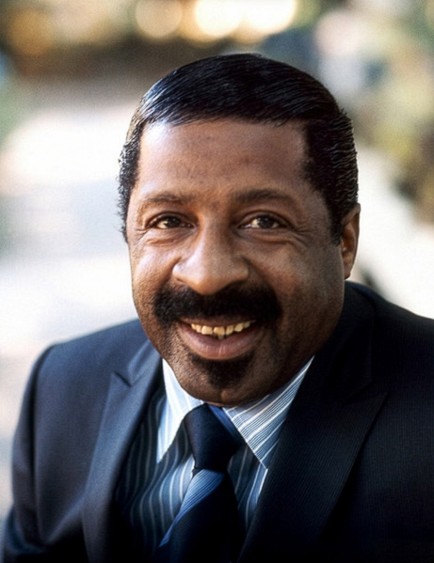
So I went to Locarno. The pianist’s name was Erroll Garner.
That did not mean very much to me.
I was fixated on rock music. Jazz was not part of my world, and I only properly understood later that this little man at the piano was already one of America’s great jazz pianists.
Perhaps that was even an advantage. I was not in awe of him. I simply had to play with him.
And that was difficult enough.
Garner had a way of dealing with rhythm that kept me rather busy at first. He changed things, shifted them, pushed ahead and then relaxed again. For a young drummer who was used to laying down a proper rhythm and then keeping it where it belonged, it took some getting used to.
At some point he gave me a piece of advice. In essence, he said: If you don’t know what I’m doing, just stop. And in general, I should not play so much. Brushes, quietly, listen.
That was probably one of the better drumming lessons of my life. Sometimes not playing can be harder than playing.
So I played with brushes, listened, and tried not to get in Garner’s way. Apparently it worked. He was satisfied, and as far as I was concerned that settled the matter. I had a job.
Today I have to laugh about it. There sits a nineteen-year-old rock fan behind Erroll Garner for four weeks, and he does not think:
My God, I’m playing with Erroll Garner!
But rather: I hope he doesn’t make another one of those rhythm changes.
Perhaps that was exactly the kind of carefree attitude you can still have at nineteen. You do not yet know who you are supposed to be afraid of.

At the time, another American was also staying at the Hotel Reber, and at first his name did not mean much to me either: Lorne Greene.
To millions of television viewers he was Ben Cartwright, the father in Bonanza. The series had already been running in America for years. In Switzerland, however, Bonanza was hugely popular at the time. Lorne Greene could hardly walk down the street without being recognised.
And that was exactly what he did not want.
As I remember it, he practically never left the hotel during his stay.
Instead, he sat by the swimming pool during the day, smoked cigars and drank whisky. That may make it sound as though he was constantly drunk. He was not at all. He simply drank his whisky, smoked his cigars and wanted to be left in peace.
We got along extremely well.
Lorne Greene also sang a little. And so, occasionally late at night, there was a combination I would dearly love to have filmed today:
Erroll Garner at the piano, Lorne Greene singing, me on drums – and a bass player.
I have to apologise to the bass player. I have absolutely no idea who he was. You cannot remember everything for sixty years.
Then Peter Alexander appeared. He too was staying at the hotel, together with Heintje, the child star of the time. They were making a film in Ticino.
Peter Alexander apparently noticed that I had a good rapport with Lorne Greene and asked whether I could perhaps introduce him to Lorne.
That did not sound particularly complicated to me. I went to Lorne and said, more or less: Peter Alexander would like to meet you. Could he come and sit with us sometime?
The answer was unequivocal. No.
No interest. He did not know him. He wanted to be left in peace.
And that was that. Peter Alexander was a huge star in the German-speaking world. Lorne Greene was not remotely interested.
I found that rather likeable.
I do not know what became of the film. Heintje’s voice broke and the film crew moved on.
After four weeks, my engagement at the Hotel Reber was over. I packed up my drums. Erroll Garner had been satisfied, Lorne Greene stayed behind by the pool, and I moved on to the next engagement.
No grand farewell chapter. No realisation that I had just spent four weeks playing with a jazz legend. I was nineteen. Ahead of me were the next orchestra, the next hotel and the next city.
Only much later did I understand what an extraordinary encounter I had been given right at the beginning of my career. But perhaps it had to happen exactly that way. If someone had said to me back then:
“Bernhard, pay attention. This man is Erroll Garner. One of the greats,” I might have been so awestruck that I could no longer have played a straight beat.
So I simply picked up my brushes, listened – and whenever I no longer knew what he was doing, I stopped. It worked surprisingly well.
Sadly, that wonderful hotel no longer exists today – it had to make way for a large redevelopment.
And for anyone wondering what it sounded like back then:
There is actually still a musical glimpse of it:
Bernhard & Erroll Garner – Locarno 1969:
Erroll Garner and Bernhard – 1969
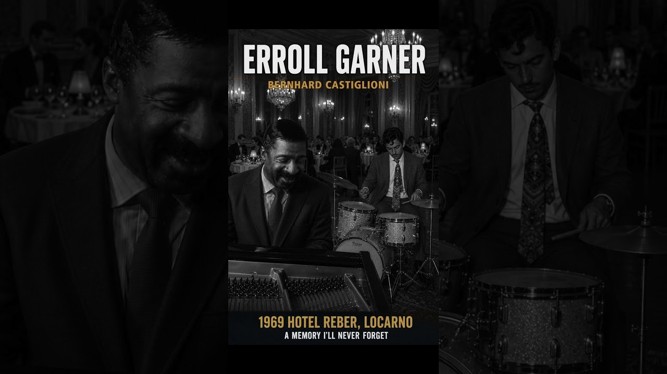
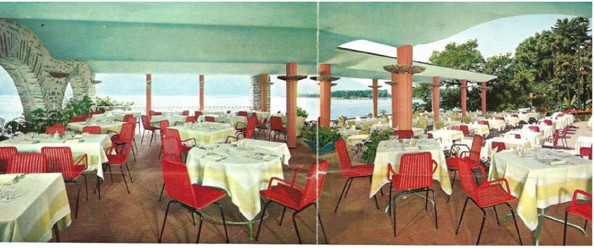
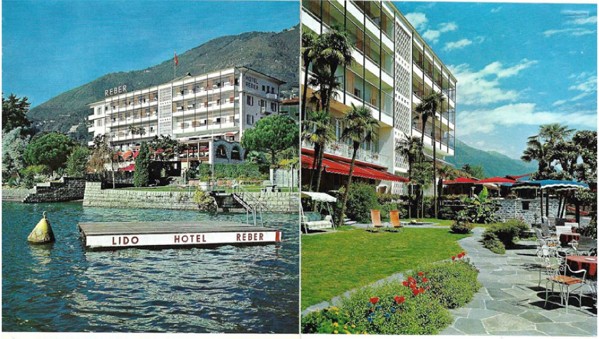
Hotel Reber – 1969
03
Now It Gets Serious
The desire to become a professional musician was one thing. Being able to make a living from it was another.
I did at least have one major advantage: I did not have to become a musician. I had completed a commercial apprenticeship and had the relevant diplomas as well. If there was no engagement at the time, I could work in an office. I had already done that.
But as soon as a drummer was needed somewhere, the office was no longer particularly interesting to me.
I was a freelancer. Today one might say: flexible and available wherever needed.
Back then, above all, it meant that the telephone could ring at any time. And when it rang, you had to be ready.
Little by little, this took me into a completely different league of the music business. At the time there was a network of agencies, hotels, dance halls and orchestras. Once you were part of it and proved yourself, you were recommended for further engagements.
The Viston agency run by Hazy Osterwald became particularly important to me.
Hazy Osterwald was an institution in Switzerland at the time, and his sextet was well known far beyond the country’s borders.
But for us musicians, what existed behind the scenes was at least as important: a network through which good orchestras were placed in good establishments.
Once you were connected to that network, doors opened.
And suddenly Europe did not seem quite so large.
The system was actually quite logical: in a city, a band tended to stay for a shorter period. More or less the same people came night after night, and eventually they knew our programme. So a new orchestra was needed.
In the holiday resorts it was exactly the opposite. Gstaad, St. Moritz, Verbier and similar places lived from their guests. After a week or two, one group left and the next arrived. To the new crowd, we were new again as well.
That was why you could play there for months. For a professional musician, an engagement like that was worth its weight in gold. You knew: I have work for the next few months.
It had very little to do with leisure, though. When I say today that we played in some of Europe’s most beautiful holiday resorts, it almost sounds like a holiday.
It was not. We were there because other people were on holiday.
In the evening, we had to be ready. Every evening.
In a good orchestra there was no excuse such as: I’m not really on form today. We were a well-rehearsed unit, and the bandleader heard the slightest deviation. A guest paying a great deal of money for his stay also expected the music to work.
So it worked.
During that period I learned something that helped me again and again later:
As a professional musician, it is not enough simply to play well.
You have to be reliable, listen, adapt and get along with other musicians. When something unexpected happens, you cannot spend ages discussing it.
You play.
Perhaps that was exactly my strength. I was not a complicated person. If someone needed a drummer, I did not start by laying down twenty conditions.
Where? When? How long?
Pack the drums and go.
That was how I eventually joined orchestras with which I travelled around Europe for longer periods.
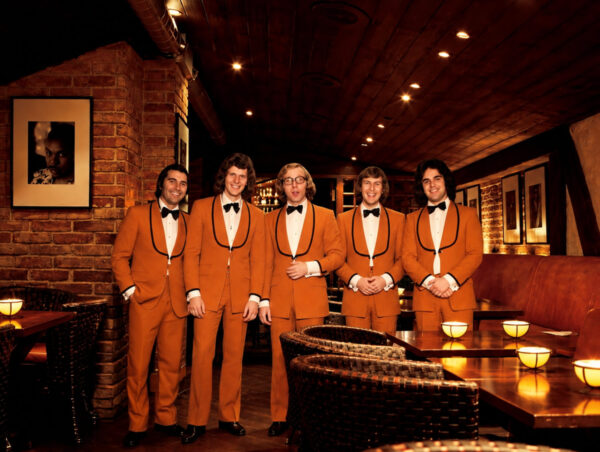
One of them was the Piero Pieri Orchestra. Six men, a proper professional orchestra.
With Piero Pieri, I found myself in places that represented an entirely new world to me: the Palace in Gstaad and the Suvretta House in St. Moritz. Sitting in the audience were people whose names you knew from the newspapers – politicians, industrialists, film stars, sportsmen and members of the aristocracy.
At first, that made very little difference to us.
Federal Councillor or baker: if he wanted to dance, we had to play the right rhythm.
And at twenty, I was genuinely very happy to be allowed to play in this orchestra as a full member, because all my fellow musicians were over thirty.
I was happy in my role as drummer, and the motto was:
A good orchestra with a bad drummer is a bad orchestra.
A bad orchestra with a good drummer is a good orchestra.
Magdalena also began accompanying me on these journeys. This world must have been at least as new to her as it was to me. But she had one quality that soon became apparent: she seemed able to move confidently in any company.
While I sat behind my drums, she would get into conversation with people and sometimes suddenly find herself quite naturally part of social circles into which neither of us had actually been born.
I was the musician. Magdalena was simply Magdalena. And somehow that was enough.
04
The Girl in Knee Socks
I was nineteen years old and was playing abroad for the first time with my beat band.
There was a girl in the audience. Sixteen years old, beautiful, knee socks – and as far as I was concerned, the matter was already settled before we had even spoken a word to each other.
I looked at her from a distance and thought:
I want to marry this girl.
After the concert, I took off my long-haired wig and went over to her.
“Did you like the music?”
Her answer was unequivocal:
She was a Beatles fan – but we had sounded more like the Rolling Stones.
And my long hair? She had seen anyway that it was not real.
Well, wonderful.
That was how I met Magdalena.
Afterwards, however, I still knew very little about her. Most importantly, I had neither her address nor a telephone number. Even so, at that very first meeting I told her, in all seriousness, that I could see a future with her.
Then I said: “Next Sunday, 12.30 p.m., Basel railway station. I’ll be expecting you.”
That was all we had arranged.
Today, people would exchange telephone numbers, send messages and probably check three times that the meeting was really going to happen.
Back then, I had nothing.
For an entire week, I had no idea whether Magdalena would come at all.
On Sunday, I arrived at the station far too early.
I waited. Then the train arrived. And Magdalena got off.
Our first love was very tender and innocent.
We went for walks, ate ice cream and held hands.
I called her Maxilein.

The girl in knee socks whom I had spotted somewhere in the audience one evening quite naturally became part of my life.
One evening I had to play. Beforehand, we were sitting together.
She took my hands and said:
“So that you can play better tonight.”
That was all it took in those days. I was happy.
Her way of surprising me and simply getting things done was typical of Magdalena.
Years later, at the Suvretta House, this showed itself in a way I have never forgotten.
I had been given a new drum.
On the spur of the moment, Magdalena made a protective carrying cover for it out of a thick army woollen blanket, complete with a zip and all the trimmings. All by herself, for hours in the hotel room, while I was downstairs playing in the dance hall.
I was completely astonished, because she had had to ask the director of the Suvretta House, Mr Müller, for the keys to the ballroom so that she could take the measurements.
The case is perfect, and I still have it today – that was Magdalena.
05
Ballroom „Terrasse“- James Bond and Black Sabbath
After my first engagements, I came to the Terrasse dance hall in Zurich with the Dr. Vlado Rubes Orchestra.
We were a ten-piece orchestra, and the Terrasse was no small bar but a large establishment with champagne, hostesses and a floor show.
Right next door was the Niederdorf, where there was plenty going on at night – though not indefinitely. Zurich still had an official closing hour in those days. At midnight, officially, it was all over.
For us musicians, the Terrasse was a proper engagement:
A large orchestra, a large venue, entertainers and an international audience. And at some point, guests began turning up and at first we did not really know what sort of group had gathered there.
A new James Bond film was being made in Switzerland at the time. After filming, the crew came to the Terrasse. Sean Connery was there, and so was Roger Moore. Magdalena, of course, was right in the middle of it all.
By then she could speak a little English and got talking to them.
The atmosphere was lively, and at some point Roger Moore jokingly did what everyone naturally associated with James Bond. He stood up and said:
“My name is Bond – James Bond.” Everyone burst out laughing.
Then Sean Connery did the same. More laughter.
Finally there was a third man. Tall, slim, good-looking. He joined in as well:
“My name is Bond – James Bond.” This time nobody laughed.
Sean Connery and Roger Moore, however, laughed all the more.
They called out to him that he still needed some practice.
As far as we were concerned, that was the end of it. We had no idea who the third man was.
About a year later, Magdalena and I were sitting in the cinema watching the new James Bond film.
Suddenly that man appeared on the screen.
That’s the fellow from the Terrasse! His name was George Lazenby.
Well, imagine that.
The very man whom the other two had told he still needed to practise was now, in fact, the new James Bond.
But film stars were not the only people wandering around the Terrasse.
Right next door, at the Hotel Hirschen, an English band was playing at the same time. A crazy, wild bunch, completely unknown back then.
They called themselves Black Sabbath.
The conditions under which they played were anything but luxurious. As I remember it, they had to play for about eight hours, with only short breaks. And they were rehearsing a piece that would later become rather well known: “Paranoid”.
I became friends with the drummer, Bill Ward, but also with Ozzy Osbourne and the other boys. We were musicians, and most of the time that was enough.
Sometimes they came over to see us at the Terrasse. There was just one small problem: they did not exactly have much money, and the Terrasse was not the sort of place where a young English band could afford to spend money every evening.
So I helped things along a little.
I smuggled them in through the artists’ entrance at the back.
Backstage, they could watch the entertainers and circus acts. Magdalena was sometimes there too. Nobody made a great fuss about it. They were fellow musicians, so they simply came in through the back.
In return, I sometimes went over to see them at the Hirschen in the afternoon.
Bill Ward developed an amusing habit:
The moment I walked through the door, he would start hammering away: drum solo.
Whether he wanted to impress me or was simply pleased that another drummer was there, I do not know. Perhaps both.
His fellow musicians did not particularly care.
The lady who ran the place, however, cared very much.
I think her name was Frau Schwarzwälder – after all these years, I am no longer entirely certain of the name.
In any case, at some point she had had enough of Bill’s spontaneous drumming outbursts.
One afternoon I came through the door again.
Bill saw me and immediately launched into it. Drums, cymbals, full power.
Then the owner’s voice came over the public-address system:
“No drum solo please! No drum solo please!”
A short pause.
“But a beer for Bernhard.”
At the time, I simply found it funny. Nothing more.
To me, Black Sabbath were not rock legends.
They were the English boys next door.
Nor had I thought, when I met George Lazenby, that the whole world would soon know this man as James Bond.
We simply did not know such things.
You met people, you played, you had a drink together and helped one another.
Then the band moved on – the next dance hall was waiting.
And life went on.
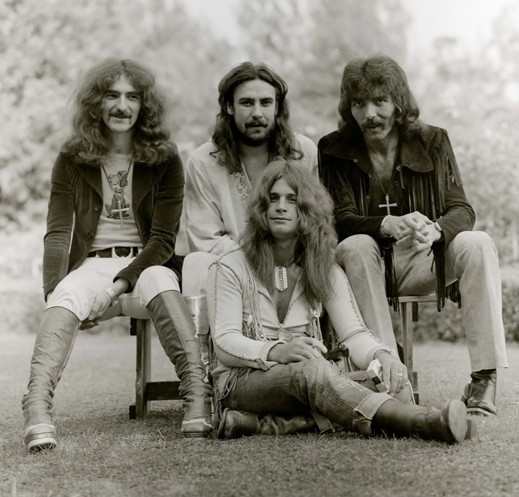
Black Sabbath
06
Pension Haruda and the beautiful Aziza
In Zurich at the time there was a boarding house called Pension Haruda.
It was in a large apartment building that was fairly run-down.
Even so, it was an important address for dancers and professional musicians staying temporarily in Zurich. Anyone working in the city for a few weeks or months needed a bed somewhere, after all.
At the entrance sat a grim porter who took his duties very seriously. No man whose name was not on the residents’ list was allowed into the building.
For me that was no problem, because I lived there. So I found myself in the slightly unusual situation of having a room in a building where about forty dancers also lived.
It was a cheerful community. People cooked, talked and celebrated in the shared kitchen.
Many nationalities, languages and cultures came together, and somehow everyone managed to understand one another.
People came and went. One engagement began, another ended; someone had to move on to another city or even another country. Some farewells were difficult. For a while you lived very closely together, while knowing at the same time that this community could never last.
At the Terrasse there was a beautiful Egyptian dancer called Aziza. To be quite honest, of course, she also worked as a hostess. She was very young, perhaps sixteen – who really knew for certain in those days.
Champagne was part of the business. But the hostesses did not drink it from the tall flutes commonly used today; they drank from wide champagne coupes. With little wooden sticks they stirred the bubbles out of the champagne. This, they said, prevented a bloated stomach.
Whether that made any medical sense did not particularly interest anyone. It was simply what they did.
Aziza urgently needed a room, and I tried to help her. But the Haruda was practically full.
My room did, however, have a sort of enclosed balcony or conservatory attached to it. It was unheated, but at least it was a room.
So Aziza moved in there.
A rather peculiar routine developed. I would come home from work and be fast asleep by the time Aziza eventually came banging drunkenly on my door.
I got up, let her in, and she disappeared into her little conservatory.
That worked quite well for a while.
Until winter arrived – eventually it was simply too cold out there.
One morning I woke up and discovered that Aziza was no longer in the conservatory.
She had climbed into my bed and snuggled up beside me.
That was not really what I wanted.
But who pushes a beautiful woman out of bed?
So apparently that problem had been solved as well.
Things became slightly stranger when Aziza slipped me a note at the Terrasse around midnight.
On it was an address and the request:
“Can you pick me up there in an hour?”
And of course I drove there and collected her. Sometimes I did wonder:
Have I somehow become a pimp as well?
I don’t think so.
I was more of a driver, room-finder and, occasionally, an involuntary heater.
Magdalena became friends with Aziza too.
To us, the whole situation seemed rather less extraordinary at the time than it perhaps sounds today.
It was the sixties, after all

07
Stuttgart and the GI’s
We were playing with José Marka in Stuttgart at a large club frequented by many American soldiers. The GIs were an appreciative audience. They wanted music, atmosphere and a good time, and when they liked something they could be remarkably persistent.
One night, at around two in the morning, we had finished our programme. We wanted to go back to the hotel, but that was not going to happen.
Several American soldiers insisted that we absolutely had to come with them to their Army club on the Killesberg. An American band was playing there, and apparently the GIs thought we should go over and show our fellow musicians a thing or two.
I had no desire whatsoever to go. Not because of the Americans, and not because of the music, but because of Magdalena. She was waiting for me at the hotel and had probably already prepared our meal.
After all, we lived on a rather different daily schedule from other people. When they were already thinking about breakfast, we were having dinner. Magdalena and I usually sat down to eat at around three in the morning.
But the Americans would not take no for an answer, and eventually I had to go with them.
Once we reached the camp on the Killesberg, however, I could not relax. Magdalena had no idea where I was, and I could vividly imagine her sitting in the hotel waiting for me.
So I found the commanding officer and explained my problem.
To him, the solution was surprisingly simple.
“No problem.”
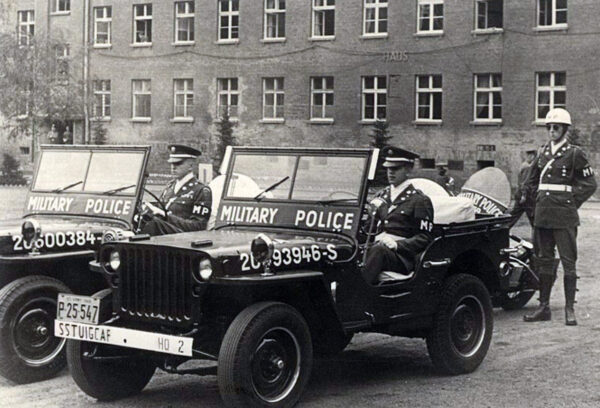
He sent two American military-police jeeps to our hotel.
I do not know exactly what was arranged after that, but the MPs apparently turned the whole thing into a little spectacle.
They arrived at the hotel and “arrested” Magdalena. Only as a joke, of course. But if they were going to do it, they did it properly: two military jeeps, sirens and flashing blue lights.
Then they drove Magdalena through Stuttgart to the Killesberg. According to her, at times they were doing more than a hundred kilometres an hour through the city.
The American armed forces in Germany at that time had freedoms and possibilities that seemed quite impressive to us. As occupying forces, they were allowed to ignore all traffic regulations, and the ordinary police had no say in the matter. One of their main duties after midnight was to collect GIs from the bars and take them back to their quarters.
I might have expected Magdalena to arrive at the camp completely frazzled after this nocturnal adventure.
The opposite was true.
She had thoroughly enjoyed it.
So much for my guilty conscience.
Magdalena was there, the GIs were happy, and at last we could turn to the reason they had dragged us along in the first place: music.
What was supposed to be a short detour after our normal working night turned into a second night shift. We played and played, the Americans celebrated, and eventually it began to get light outside again.
At around eight in the morning, it was finally over.
I no longer remember when Magdalena and I ate our dinner that day.
In any case, it was already too late for breakfast.
Travelling Across Europe and the Church Tax
Travelling all over Europe meant that we musicians often had no fixed place of residence.
Sometimes we registered with the local authorities, sometimes we did not. And naturally that also had consequences for taxes.
In principle, taxes were due wherever we happened to be playing. But you could also say:
“I’m still registered in Switzerland, in Basel.”
And when it came to military service in Switzerland, you could in turn explain:
“No time, I’m registered in Germany now, in Berlin.”
The fact that you had long since left Berlin without deregistering did not necessarily have to be mentioned.
I even had a tax certificate from the Principality of Liechtenstein that I could produce if any problems arose.
The result was that some of my colleagues paid a great deal of tax everywhere.
Others paid none anywhere.
But once, an official letter really did catch up with me.
We were playing at the renowned Hotel Bayerischer Hof in Munich.
At around eleven at night, three policemen appeared.
In those days they were still called gendarmes.
They had been instructed from Berlin to deliver a letter to me concerning Swiss church tax. And the exceedingly diligent officers had actually managed to find me.
We were in the middle of playing, and the three of them stood in uniform in front of the stage.
One policeman would, of course, have been perfectly sufficient. I was hardly a violent criminal. All they had to do was hand me a letter.
But presumably the gentlemen wanted to see the inside of the Bayerischer Hof for themselves.
So all three of them came. The enormous sum at stake:
81 francs and 50 centimes.
That was probably one of the reasons why, at some point, I formally left the church…
08
Tonight: Saas-Fee
There were always periods in the life of a professional musician when no engagement happened to be lined up.
During one such spell, I was sitting at home in Basel considering taking another temporary commercial job.
That was no problem for me. I had my training, my diplomas and already had good experience in such positions.
Then the telephone rang.
An orchestra in Saas-Fee urgently needed a drummer.
Their regular drummer was in hospital with acute appendicitis. They wanted me there immediately.
Six-piece orchestra. Tonight.
Quick, quick.
And with that, my commercial career was put on hold once again.
Saas-Fee was car-free. So everything had to go by train into the Valais. My luggage was no problem, and of course my drums were ready to go. As a musician, you had to expect a call like that.
So everything went into the luggage van of the passenger train, and off I went.
There was just no way to reach Magdalena in time.
No mobile phones, no text messages, no quick note saying: I’m in Saas-Fee for a few weeks, I’ll be in touch later.
I had simply disappeared.
When I arrived in Saas-Fee, the next surprise was waiting for me. The band was Italian, and I did not speak Italian.
But musicians have their own language. Someone counts in, and then you see what happens.
“Ob-La-Di, Ob-La-Da”, “Azzurro”, Italian hits – I knew many of them; the others I simply had to pick up as quickly as possible.
It worked surprisingly well. And above all, it was fun.
The dance hall was large and very popular.
Before opening time, people were sometimes already waiting outside to get in.
Once, that very success even worked against me:
The security staff had changed and would not let me in. Their list still had the name of the previous drummer on it.
I could explain all I liked. The man at the door did not know me.
Somehow, in the end, I managed to convince him that the suspicious gentleman from Basel might actually belong to the band.
During the day, I had plenty of time. Many ski instructors came to the dance hall, recognisable by their red jackets with the Swiss cross.
After the music finished, we sometimes sat together and played poker for small stakes.
Eventually they asked me: “Bernhard, why don’t you ski?”
I had a good excuse. As a musician, I said, I was not allowed to. Too dangerous.
The answer was unequivocal: “Nonsense!”
The previous drummer had gone skiing too, after all. And what exactly did I intend to do with myself during the daytime for the next six weeks?
They had a point. So we went to one of the ski school’s storerooms, where I was equipped with everything I needed for skiing.
I could already ski quite well, and from then on I spent my days roaming the mountains on my own.
Sometimes I saw the ski instructors; they waved to me and I waved back.
I had only one problem: the lift. There I had to queue like everyone else, sometimes for almost an hour.
That evening Willy, the head ski instructor, came into the dance hall.
This would not do, he told me. I could not spend hours standing around at the bottom of the lift.
Besides, they would now have to make sure I reached top level as quickly as possible – just like on the drums.
Then he gave me a red ski-instructor’s jacket. It was supposed to bring me luck.
From that moment on, my skiing life changed considerably. I no longer joined the back of the queue. Instead, I skied straight to the front and said something like:
“Permesso, arrivati, thank you!” And it worked.
People saw the red ski-instructor’s jacket with the Swiss cross and naturally made way. I was straight onto the lift or into the gondola.
Apparently I played my new role rather convincingly. Because eventually holidaymakers began approaching me and asking whether I still had any openings for private lessons. They kept seeing me skiing up and down on my own, and I obviously seemed to ski rather well.
Now I could hardly explain that I was not a ski instructor at all, but a drummer in the dance hall in the evenings.
So unfortunately I had no appointments left.
Fully booked.
While I had meanwhile settled into a rather pleasant life in Saas-Fee, things looked rather different for Magdalena. She had heard nothing about my sudden disappearance and apparently arrived at the obvious explanation: there had to be another woman involved.
So she rang my mother.
My mother was able to reassure her.
She had fairly convincing proof that I had not disappeared on some romantic adventure.
“His car is here,” she said, more or less.
“But his drums are gone.” That really settled the matter.
Wherever my drums were, that was normally where I was too.
This time, in Saas-Fee. Supposedly a ski instructor by day. Drummer by night.
And unfortunately fully booked for private lessons.
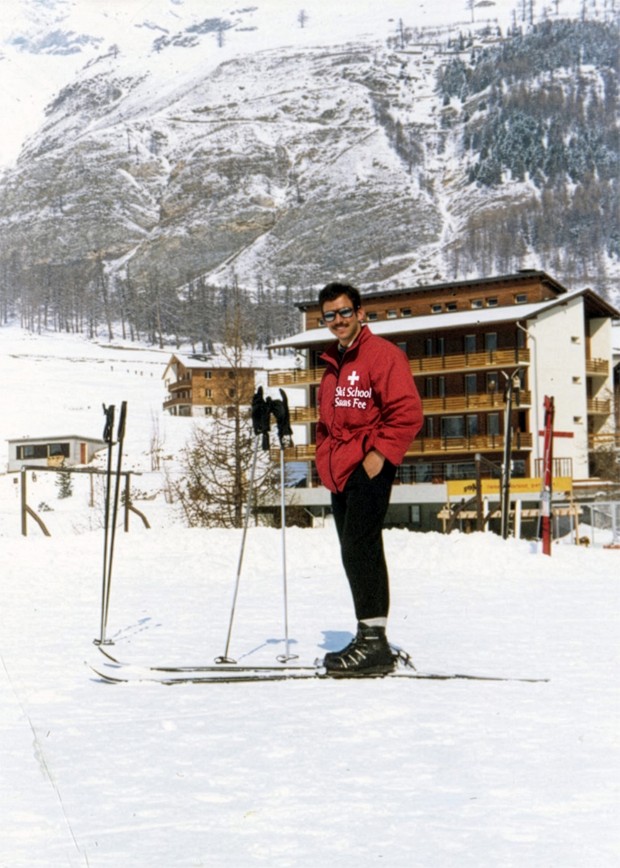
The ski-instructor’s jacket
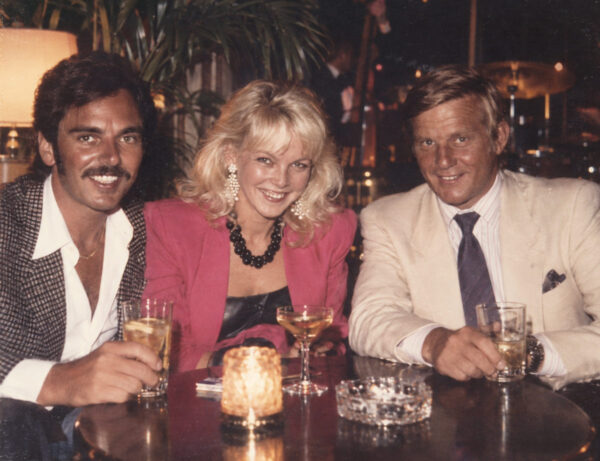
Willy, the head ski instructor
09
Four Months at the Suvretta House
With the Piero Pieri Orchestra, we came to the Suvretta House in St. Moritz for four months.
For a professional musician, four months in the same place was a wonderful thing.
You did not have to keep packing your suitcases, you knew where you would be playing the following week, and above all you knew that money was coming in.
We did not have a day off, but that was normal in those days. After all, we were not in St. Moritz to ski, but to work.
The Suvretta House was a world of its own. A large, elegant hotel, international guests and an atmosphere in which things that would have seemed extraordinary elsewhere became almost routine after a few weeks. We played night after night, and while the guests changed, we stayed. Naturally, that meant we saw quite a lot. Not because we were especially curious, but because as a musician you sit in the same place for hours and watch the life of an entire hotel unfold in front of you.
Among the guests who stayed there for longer periods were the Shah of Persia and his wife, Farah Diba.
They stayed with their entourage in the Villa Suvretta right next to the hotel. There were also members of the Iranian secret police and Swiss security personnel from the Federal Palace in Bern.
As I remember it, for security reasons the Shah and Farah never appeared together. Even that eventually became normal for us musicians. If one of them came in, you simply carried on playing.
The Shah liked music and listened surprisingly closely. He particularly enjoyed my drum solo, in which I used oriental rhythms and odd time signatures.
I enjoyed that sort of thing, and naturally I was not unhappy that the Shah of Persia, of all people, liked my drumming.
Once, during the solo, he stood up, came over to me and placed both hands on my shoulders while I carried on playing.
I no longer remember what went through my mind at that moment.
Probably not very much. What else could I do? I simply kept playing.
Today one could turn it into a grand scene: the powerful Shah of Persia, the young Swiss drummer, oriental rhythms in the elegant Suvretta House. At the time, it was simply another evening during a four-month engagement.
The next day I was back behind my drums, and at some point the Shah came in again.
It is only when I tell these stories today that I sometimes realise myself just how unusual they actually were.
A year later, I returned to the Suvretta.
This time I was no longer playing with Piero Pieri, but with José Marka. For me, that was a step up.
José Marka and his band played within a large network of first-class establishments, and musically it was another step forward for me.
The Shah was there again too, and he quickly noticed that something was missing.
He had someone ask why I was no longer playing the drum solo with the oriental rhythms that I had performed the year before.
The explanation was simple: with José Marka, that solo did not exist.
So José and I sat down together and put together something suitable.
Problem solved.
My drum solo was back, the Shah was happy, and we carried on playing.

Dahlia Lavi – Jerusalem Suddenly Got a Little Higher
Once again, we were at the Suvretta House. A star guest had been announced:
Dahlia Lavi – a beautiful woman, known from the James Bond film Casino Royale and already a star in the German-speaking world.
Singing, however, was not necessarily what we considered her greatest strength.
In the afternoon we prepared for the rehearsal.
Dahlia Lavi herself did not appear; only her pianist came and went through the pieces with us.
No problem. We were professionals, the arrangements were clear, and in the evening nothing could really go wrong.
In theory.
During the performance she stumbled over one of the pieces and had to start again. Then, in front of the entire audience, she said to José:
“Cher Chef d’orchestre – can’t you finally play the piece the way we rehearsed it this afternoon?”
That was, of course, complete nonsense. She had not been there that afternoon at all.
We played the piece again – exactly as before – and this time it worked beautifully. José smiled politely. But I knew him well enough.
Behind that smile he was boiling. He was not going to let that pass.
The next number happened to be her big hit, “Jerusalem”. The song climbs higher and higher through several key changes.
And that was when we musicians made a small but consequential decision:
We simply started in a higher key, beginning, so to speak, where things normally only became serious later on.
At this point I would like to state expressly:
As the drummer, I was completely innocent. Keys are not my responsibility. I only set the tempo.
So Dahlia began quite comfortably. At first, everything seemed fine.
But slowly she began to realise what lay ahead of her musically.
The key climbed and climbed, and as we approached the final bend before the steep ascent to the finish, it became clear: she was never going to make it up there.
So she stopped singing.
She merely trilled: “La la la …”
Naturally, we accompanied her professionally right to the end.
Over the next few days there were no more problems.
Dahlia Lavi was as meek as a lamb.
During this second period at the Suvretta, Magdalena was with me as well.
By then she spoke a little French, which was naturally useful in such an international setting.
In any case, she was not someone who needed much encouragement to start talking to people.
It apparently made little difference whether the person opposite her was a musician, a hotel guest or someone from a completely different social world.
One evening, the hotel held a grand gala.
The fur dealer Lindner and the jeweller Gübelin were presenting a fashion show.
It was a decidedly glamorous affair: beautiful models, some of them wearing very little, but all the more fur and jewellery.
We played for the show, while Magdalena sat alone at the bar.
Then Farah Diba appeared.
She stopped at the bar and spoke to Magdalena. I sat behind my drums and watched the two of them. They spoke in French, briefly at first, then for longer and longer.
Of course, I could not simply get up and go over. I had to play.
Then something happened that I had not expected at all:
Magdalena left the bar with Farah Diba – and a little later she was sitting with her at the Shah’s table.
She stayed there all evening.
I sat behind the drums and could only watch.
To Magdalena, all of this seemed perfectly natural.
She did not suddenly become a different person simply because she was sitting beside the Empress of Persia.
Perhaps that was exactly why Farah liked her.
In any case, the two of them got on extremely well.
For me, the situation was slightly more difficult.
After all, I had to work, and I could hardly say to José in the middle of a number: Excuse me, I’d just like to see what my girlfriend is doing at the Shah’s table.
So I stayed where I belonged and played the drums.
But this encounter was to have consequences.
Farah wanted to see Magdalena again.
In principle, that was no problem – except that shortly afterwards our lives became considerably more complicated.
At that time, something happened that briefly threw my life completely off course. I had to go into hospital, and José suddenly needed a replacement drummer.
What had really happened back then, however, belongs to another story.
The Shah naturally noticed that there was suddenly a different drummer behind the kit.
And when I later returned to the Suvretta, it became clear that he too had heard more about my story than I had initially realised.
A week later, I found myself sharing a lift with the Shah.
Situations like that were possible at the Suvretta:
You played for someone in the evening, and the next day you were standing beside him in the lift.
He told me that Farah was in Paris at the time. When she returned, she would like to see Magdalena and give her a present.
What the Shah did not know was that Magdalena had meanwhile been banned from the hotel.
But that is another story, and one we still have to tell.
Then he said that he wanted to give me a present as well. I should go to Gübelin – the jeweller had a presence in the hotel – and choose a nice watch for myself.
Of course, I could have tested just how generous the Shah of Persia really was.
I did not.
I did not want to be cheeky, so I chose a Piaget, an oval watch of the kind that was fashionable at the time.
That could have been the end of the story.
But it was not.
Five years later, the Piaget stopped, and I could not get it running again.
I took it to Gübelin in Basel and at first did not have the impression that they were particularly pleased to see me.
They explained that they no longer carried Piaget. The watch would probably have to be sent away, it could take six months, and it would probably be expensive as well.
All right. I left the watch there and thought: Then I’ll simply buy another one. But certainly not from Gübelin.
At around eight o’clock that same evening, the telephone rang at my home.
It was Mr Gübelin himself, who, as I remember it, was already about eighty years old at the time.
He was calling from Zurich and told me that a terrible mistake had been made.
Two of his best men were already on their way to Basel to sort the matter out.
And sure enough, a little later two gentlemen were standing in my home – with an entire collection of watches.
My Piaget could no longer be repaired, they explained. I should therefore choose another watch.
I did – and this time I asked no further questions.
Sometimes the Shah puts his hands on your shoulders during a drum solo. Sometimes your own girlfriend suddenly finds herself sitting beside Farah Diba.
And sometimes, five years later, the telephone rings in the evening and old Mr Gübelin sends two men to Basel with a case full of watches.
And this is what the José Marka Orchestra sounded like back then:
Click link: Playlist José Marka and Music in the Suvretta House
10
Four Weeks in Persia – Unfortunately Not
During our time at the Suvretta House, the Shah of Persia was planning a gigantic celebration in Persepolis.
Among the famous ruins, an enormous tent city was being built where guests from all over the world were to be received and entertained.
Apparently, the Shah wanted to use staff he knew from the Suvretta and trusted.
As I remember it, practically the entire team was supposed to go: the barmen, including the legendary Mario, the waiters, the cooks and even the chambermaids.
For a while, the Suvretta was, so to speak, going to be transplanted from St. Moritz to Persia.
And then the request came to us as well.
The entire orchestra was to fly to Persia for four weeks. Everything included, plus a fee that by our standards at the time was astronomical.
Naturally, we were tempted. Four weeks in Persia, Persepolis, a celebration like that, and being paid a princely sum for it as well – what young musician would not have wanted to say yes?
There was only one problem: we were part of Hazy Osterwald’s organisation.
Our engagements had been scheduled, the next hotels were waiting for us, and we could not simply disappear for four weeks – not even for the Shah of Persia.
So we turned it down.
Today that sounds almost absurd. The Shah of Persia invites you, offers an astronomical fee, everything is paid for – and our answer, in effect, is:
Sorry. We already have an engagement.
But that was how it was in those days. A contract was a contract.
What was later made of those lavish celebrations and their political significance does not really belong in my story.
I knew nothing about any of that at the time. For me, one memory remained above all:
Four weeks in Persia. Everything paid for. An astronomical fee.
And we could not go. We had to work.
11
Magdalena and the Other Man
There had already been cracks in our relationship before.
One of them began in Munich.
I was there on an engagement when Magdalena called me. Something terrible had happened, she said.
She was crying desperately and told me that she had been with another man.
She was sorry, very sorry. What hurt me particularly was that things had happened between them which, in my understanding at the time, belonged only to the two of us.
At that moment, my world fell apart.
I did not think for long.
At midnight I got into the car and drove from Munich to Rheinfelden.
I wanted to be with Magdalena, talk to her, see her and somehow put right what was threatening to fall apart.
When I arrived, she was not at home.
She did not appear until around five in the morning. And then I learned that she had been with that man again.
We talked for a long time. There were many tears, on both sides.
Even so, I did not have much time, because I had to leave again and return to the Bayerischer Hof in Munich. That was the life of a professional musician:
Even when everything in my private life was falling apart, my orchestra was waiting.
Only two days later, a letter arrived from Magdalena. She wrote that she had gone back to that man after all.
At the same time, she apparently already knew that she would regret it again.
That was the first time I ended our relationship.
How we got back together about three months later, I no longer remember. I could invent a beautiful reconciliation scene for this book, but it would be exactly that – invented. The fact is: we were together again.
And similar stories were to repeat themselves several more times.
The fifteen-year-old girl in knee socks had meanwhile become a young, lively woman. I first had to learn how to deal with that.
About a year later, I was playing with José Marka at the Suvretta House in St. Moritz.
This time Magdalena had stayed in Rheinfelden.
Another letter arrived. And once again she wrote about other men, this time with an openness that completely knocked me off balance.
I can no longer reconstruct exactly what was going on inside me. I only know that I was desperate and believed I could no longer go on living.
I obtained some medication from a pharmacy in St. Moritz and took an overdose.
The pharmacist had apparently become suspicious and acted responsibly. He contacted the director of the Suvretta House.
Together with José Marka, the director searched for me, and they found me unconscious in my room.
Suddenly my life was hanging in the balance and was no longer in my own hands.
They did not take me to the hospital in St. Moritz, but to Landquart. I was, in a sense, hidden there so that nobody knew where I was.
I remained in hospital for ten days. In the meantime, a replacement had to be found quickly for the orchestra, and another drummer was flown in from Zurich and landed at the airfield in Samedan.
For me, it was the absolute lowest point of my life.
When Magdalena learned what had happened, she immediately got on a train and came to St. Moritz. That belongs to this story just as much as everything else. She was the woman whose letter, in the state I was in at the time, had affected me so deeply – but when she heard about my collapse, she immediately wanted to be with me.
She did not get very far, however.
José intercepted her at the railway station in St. Moritz. I was in Landquart, and apparently they initially wanted to keep me away from anything that might upset me again.
José sent Magdalena straight back home.
My absence had naturally been noticed at the Suvretta as well. The Shah of Persia had sat in front of our orchestra often enough to notice that there was suddenly another man behind the drums.
He asked about me and eventually learned that I had no health insurance.
At the time, I simply had not thought I needed any.
The Shah covered the costs. He paid for my treatment and also the expenses caused by the replacement drummer.
I had not asked him to. It simply happened.
The director of the Suvretta also drew his own conclusion from the whole affair:
Magdalena was banned from the hotel.
Two weeks later, my world already looked surprisingly different. I had recovered well and was back in St. Moritz.
I took long walks with a Persian saleswoman who worked for Gübelin, and the daughter of an American millionaire decided to teach me how to ice-skate on the rink behind the hotel.
The result was probably more entertaining than elegant.
I could ski, I could play the drums, but at first I moved rather clumsily on skates.
That did not bother us. We had fun, I tried to stay on my feet, and we laughed a great deal.
What I did not know was that Magdalena had returned to St. Moritz.
Because she had been banned from the hotel, she could not simply walk into the Suvretta House. So she watched me from some distance away.
She saw me moving around the ice with this young American woman – or rather wobbling around – and heard me laughing.
Two weeks earlier she had travelled to St. Moritz and had not even been allowed to see me. Now she came back and found a Bernhard who apparently was already able to laugh again.
Later we met in the village, with the Persian saleswoman at my side.
The three of us had a long conversation, and somehow Magdalena and I were together again.
When I sort through our old letters today, I notice something I had never seen quite so clearly before:
This collapse came almost exactly halfway through our time together. And afterwards, my tone changed.
The letters before it were emotional. I asked, explained and probably pleaded at times as well.
Afterwards, a different Bernhard can be heard. My letters became more matter-of-fact and occasionally even cynical.
“You faithless woman,” I wrote once. Another time, more or less simply: “We’ll see how things stand in the spring.”
That does not sound like a man whose world collapsed again with every new story.
Apparently something inside me had loosened its grip. Perhaps I had learned to protect myself.
And if I am honest, by then I had also found my own ways of consoling myself. Very thoroughly, in fact.
Nevertheless, Magdalena and I stayed together for about another four years, even beyond the end of my time as a professional musician.
At some point, I got a flat of my own.
So our story was by no means over in St. Moritz.
But afterwards, it was a different story.
The collapse in St. Moritz was real. It was my lowest point, and without the intervention of other people, my story might have ended there.
But it went on.
Two weeks later, I was standing on an ice rink behind the Suvretta, barely able to skate, and laughing.
And somewhere in the distance, Magdalena was standing there, listening to me.
12
Six Men at the Palace
Joining the Piero Pieri Orchestra was the next important step for me. There were six of us, a well-rehearsed orchestra, and with Piero I found myself playing in establishments that ranked among Switzerland’s finest addresses at the time.
One of them was the Palace Hotel in Gstaad.
When you say Gstaad today, people think of celebrities, money and international society.
It was no different then. Except that I was right in the middle of it – behind the drums.
The bar where we played was frequented by Federal Councillors, French industrialists, businessmen and international guests.
I remember, for example, Federal Councillor Gnägi and Marcel Dassault. Whether the Mirage aircraft deal was actually discussed there, of course I do not know. But the idea certainly fitted that world and would not have been far-fetched.
We musicians picked up quite a lot anyway. After all, you sat in the same place every evening and watched the people – and the people watched us.
Some of the best tennis players in the world were there too: Ilie Năstase, Roy Emerson and Ken Rosewall.
If I remember correctly, Rod Laver as well.
The next morning, some of these gentlemen had to play tennis in front of thousands of spectators.
That did not necessarily stop them from having a drink at the Palace the night before – though “drinking heavily” would be a more accurate description.
They did, however, take great care to keep things fair. If they were going to drink, then nobody should drink less than anyone else. After all, they wanted to compete the next morning under comparable conditions.
Fair play of a rather special kind.
The guests at the Palace were fairly free with their money. We musicians noticed that too, because people regularly bought us a round.
Whisky and Coke was popular.
There was only one problem.
Piero Pieri imposed a fairly strict alcohol ban on the musicians, and with good reason. We played together every evening and were so well rehearsed that Piero would have noticed the slightest irregularity immediately.
So we did not drink. At least, not really.
We had a little arrangement with the staff:
If a guest bought us a round of whisky and Coke, naturally we accepted with thanks. There was simply no whisky in our whisky and Coke.
Coke was perfectly sufficient.
We shared the corresponding proceeds.
That way everyone was happy: the guest had bought the musicians a round, Piero had a sober orchestra, and we had earned a little extra.
As a professional musician, you had to think practically.
Although Piero himself, of all people, was occasionally rather more generous in his interpretation of the alcohol ban. Sometimes he would leave the band, sit down at a guest’s table and quite happily have a drink with them.
Naturally, we noticed.
But Piero was the boss.
And we were not on first-name terms with the boss. We addressed him formally.
That perhaps says more about those days than a long explanation could. A band was not a group of six mates who happened to make music together. There was a hierarchy. The boss decided, we played – and as long as everything worked, all was well with the world.
One evening, a guest appeared with two stunningly beautiful young women. He came over to us and asked:
“Do you play Yellow Bird?”
Yellow Bird was a sentimental Hawaiian tune.
We looked at one another.
We did not really know the piece. The older, experienced guitarist vaguely remembered it, and I at least knew the melody, which was not enormously useful to me as the drummer.
Normally, we might have said: Sorry, it’s not in our repertoire.
But then the man waved a 500-franc note.
Suddenly our musical memories improved considerably.
We put our heads together briefly. The guitarist had a rough idea where it went, the others found the harmonies, and I thought: if these gentlemen know what they are playing, I will probably manage to work out where the beat is.
Off we went. It was dreadful, but recognisable.
The guest was delighted, and the 500-franc note really did come flying over.
About an hour later, we thought that actually this Yellow Bird was not such a bad number. We could perhaps try it again. Purely out of musical interest, of course.
We played it a second time. Another 500 francs.
By now we liked the piece considerably more.
A few days later, our benefactor appeared again.
Whether he had the same two ladies with him, I no longer remember. But that was not important. We saw him, he saw us – and we knew what had to be done: Yellow Bird.
Another 500-franc note came our way. Slowly, the piece was becoming one of our most financially successful numbers. We did not want to overdo it, though.
After all, a good customer had to be looked after.
Two days later, he came back.
This time, however, he was not accompanied by two young women.
Beside him sat a pleasant older lady.
We did not give it any thought. The man was there, we were there, and by now we even had Yellow Bird reasonably under control.
So we cheerfully launched into our successful Hawaiian melody and looked expectantly towards our benefactor.
Only this time, no 500-franc note came flying.
Instead, there was suddenly quite a commotion at the table. Then even more commotion – and finally a fight.
The lady started hitting our generous guest, and the man fled the bar.
We understood absolutely nothing.
Later, the barman explained what had happened.
The pleasant older lady was his wife.
Apparently, the man had told her that he had only arrived at the hotel that very day.
Unfortunately, the moment she heard our Yellow Bird, his wife realised that something did not add up. Perhaps she knew his musical tastes.
More likely, she knew her husband.
In any case, our well-intentioned musical welcome had backfired spectacularly for him.
After that, we were a little more careful with Yellow Bird.
Five hundred francs was five hundred francs, after all.
But we did not necessarily want to destroy a marriage with it.
We were musicians. Not detectives.
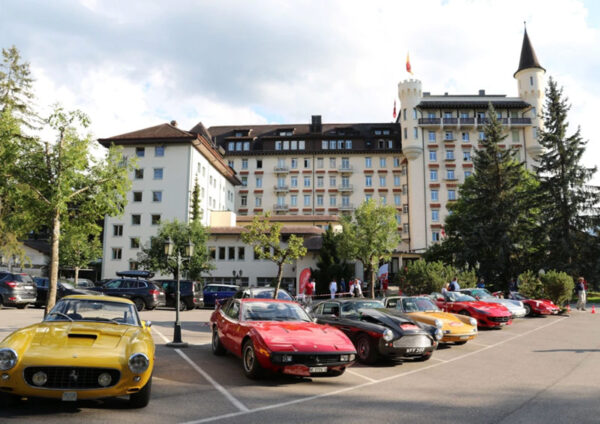
And this is what the Piero Pieri Orchestra sounded like back then:
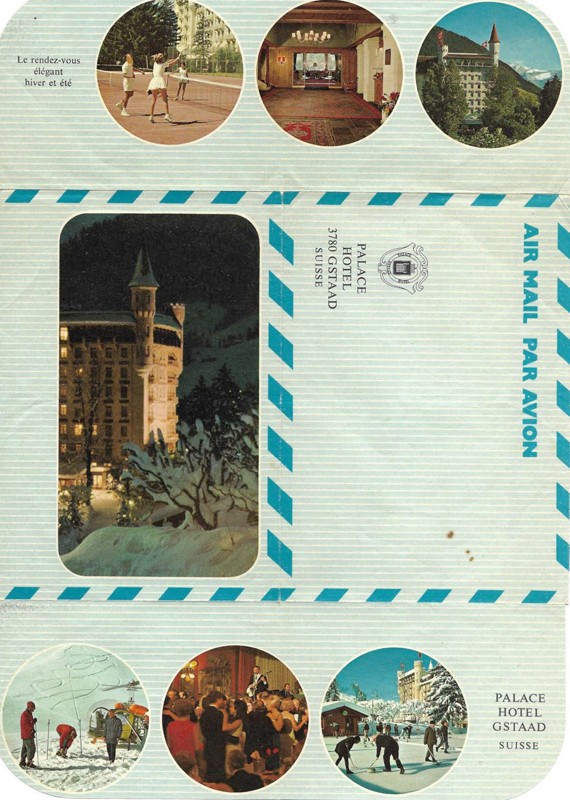
Palace Hotel Gstaad – 1969
13
A Red Rose from Josephine Baker
At the Palace in Gstaad, gala evenings were part of the business. For us, that occasionally even meant an evening off, because some of the big artists brought their own backing bands.
That was the case when Josephine Baker was announced.
Josephine Baker had long since become a legend. The famous “banana girl” of the 1920s was by then an elegant lady who was deeply committed to helping children and also raised money for her causes at events like these.
For me, however, something quite different mattered that day: I had the evening off.
At least, that was what I thought.
Josephine Baker had already been at the hotel for several days and had heard our orchestra. On the day of her gala there was a soundcheck, but her drummer was not there. He had got stuck somewhere in France. Exactly where and why, I no longer remember.
In any case, the Palace had a singer, a band – and no drummer.
So she asked me whether I could step in for the soundcheck.
I agreed, though with a certain amount of apprehension.
It was not really a proper soundcheck where we could rehearse together.
The main purpose was to make sure that everything worked technically, and because of the other hotel guests it had to be kept brief. There was not much time to get used to one another.
Then we started.
And to my surprise, it was no problem at all. This was music I knew how to play. I listened, joined in, and everything worked.
That evening, her drummer still had not arrived.
So I played the gala.
Today, I can no longer remember every piece we played.
But something else stayed with me – something I had almost forgotten myself until our saxophonist reminded me of it years later:
At the end of the concert, Josephine Baker thanked the audience – and then mentioned me by name. She thanked “Monsieur Bernard” for stepping in at short notice and presented me with a red rose.
Whether I blushed, I no longer remember.
It is quite possible.
That really could have been the end of the story.
I had helped a famous singer out of a difficult situation, the gala had gone well, I had been given a rose, and the next evening I would be sitting behind my drums with Piero Pieri again as usual.
Josephine Baker, however, had other plans.
After the concert, she told me quite firmly that I was now her drummer.
Her previous drummer was unreliable, she said, and she had fired him.
I was to pack my things – quick, quick – because the next day we were off to Berlin.
Naturally, that was the sort of offer that made a young drummer swallow hard. Josephine Baker! Berlin!
Travelling on with an international star!
But I also had to do a little calculating.
With Piero Pieri, I had six months of continuous work. Not a single day off, unless a gala like this happened to come along. For a professional musician, that was enormous security. With Josephine Baker, I had no idea what it might lead to. Perhaps a few galas, perhaps more, perhaps it would all be over again after a short time.
And besides, I have to admit something:
Her music was not particularly to my taste.
So I said:
“Sorry, Madame. I can’t do that. I can’t simply leave my orchestra.”
And I stayed with Piero Pieri.
Today, of course, one could turn this into a wonderful story about the young Swiss drummer who turned down a great career at Josephine Baker’s side. But that is not how it was. I did not for a moment believe that I was turning down a world career. I had a good, secure job in an excellent orchestra, and I wanted to keep it.
So the next evening I was back where I belonged: behind my drums with Piero Pieri.
The rose, of course, I had accepted.

14
I Had to Have a Ludwig Drum Set
When the beat wave swept across Europe in the 1960s, beat bands sprang up like mushrooms.
We did not call them rock bands yet.
And anyone who played the drums naturally paid particular attention to the man sitting behind the kit with the Beatles: Ringo Starr.
Ringo played Ludwig Drums.
Everyone could see it, because the large Ludwig logo was displayed unmistakably on his bass drum.
For us drummers, that was more than just a brand name. Ludwig was the ultimate. Rogers was still in the same league at the time, but as far as I was concerned, one thing was clear: I had to have a Ludwig, whatever it cost.
And it cost plenty.
I still have my old catalogues from those days.
In 1966, a Ludwig drum kit cost about 1,000 dollars. The dollar was worth around 4.70 Swiss francs at the time. So the kit cost roughly 4,700 francs.
That figure does not mean very much today at first glance.
It becomes interesting only when you compare it with wages at the time. As a young commercial employee, I would have earned about 800 francs a month. A Ludwig drum kit therefore cost almost six months’ salary.
With a present-day starting salary of around 5,000 francs, that would correspond – simply in terms of monthly wages – to a purchase of roughly 25,000 francs.
Today, a Ludwig kit nominally costs about 1,500 dollars. But 1,500 dollars today is something completely different from 1,000 dollars in 1966 – namely only about CHF 900.
So when I hear people say how expensive musical instruments are today, I sometimes have to smile.
For us, an American professional drum kit really was a luxury item in those days.
It was much the same with American cars and motorcycles. A Harley-Davidson or an American road cruiser had such an aura in Europe partly because these things were simply beyond the reach of most people. America was far away, the dollar was expensive, and anything that came from there automatically had something special about it.
For me, however, there was another calculation as well. As a professional musician in a top orchestra, I earned very good money. My fee was about 120 francs a day. Since we played practically every day, I earned around 3,600 francs a month. That was more than four times the roughly 800 francs I would have earned in the commercial profession for which I had trained.
And even that comparison does not tell the whole story.
During engagements, my hotel room was usually provided free of charge. Food and drink were often included as well. So I did not have to pay anything like all the expenses from my fee that a normal employee had to cover from a monthly salary.
Financially, life as a professional musician was extremely attractive for me at the time.
Even so, buying a Ludwig was something you thought about very carefully.
For a professional musician, a first-class instrument was not merely something to show off with. It was our working equipment. We played night after night, often for months without a day off. The equipment had to work, sound good and withstand that punishment.
Naturally, every drummer also knew which brand his fellow drummer played. Having a Ludwig drum kit on stage certainly meant something.
And if anyone thought he could simply stick a big Ludwig logo on a cheap bass drum and create the same impression, he was mistaken.
We were musicians. We spotted that immediately.
I still own my beloved Ludwig today – sixty years later – cherished and cared for, and as good as new.
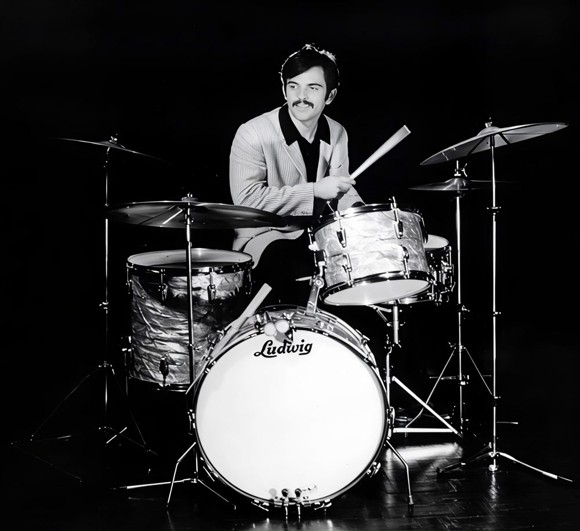
My Ludwig Drumset 1967
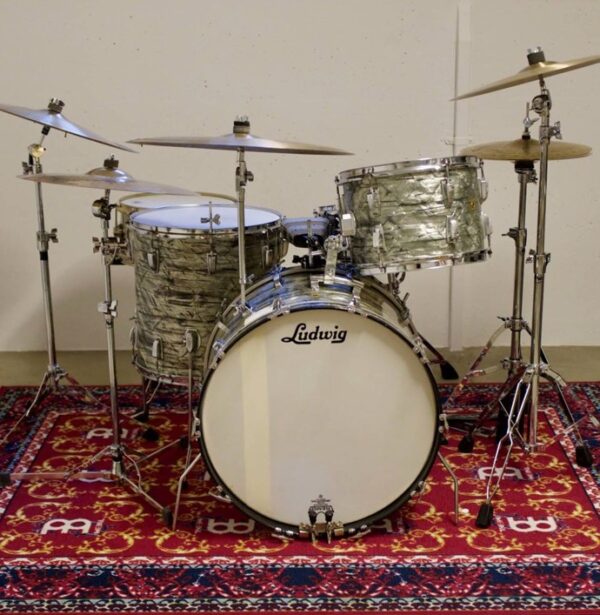
My Ludwig Drumset 2026
15
How We Worked
As a dance orchestra and show band, it was important for us always to stay up to date.
José Marka studied the charts every day. We took great pride in adding the latest hits to our repertoire as quickly as possible.
And we did not simply play something that vaguely resembled the melody.
The sound had to be right, the feeling had to be right – the piece was supposed to sound the way people knew it from the radio.
So we rehearsed in the afternoons. Sometimes we actually managed to learn a new hit so quickly that we could perform it on stage that very evening.
In the middle of the concert, José would look at us and say: “Shall we risk it? – Yes, let’s go“.
That added considerably to the excitement of what was otherwise, of course, a very well-rehearsed routine.
Nobody knew one hundred per cent whether everything would work. But most of the time, it did.
Naturally, we also played many French chansons. That was one of José’s specialities and clearly set us apart from the competition.
There was one bad habit common among many amateur musicians that we absolutely had to avoid: sheet music and music stands on stage. An absolute no-go. Everything therefore had to be memorised immediately. After all, we were a show band. And we were equally unwilling to tolerate anyone referring to our orchestra as a mere “Kapelle” (dance band).
Unfortunately, the golden age of dance orchestras was slowly drawing to a close. More and more discos were opening.
At the same time, large orchestras from what was then occupied Czechoslovakia were coming to Switzerland, some of them almost family businesses.
Whether the wife perhaps did nothing more than play a triangle or shake a rattle was beside the point: “We are twelve-man orchestra, make good cheap price and nice to look at.”
Indonesian groups also came to Europe – with a similar formula. Competition for the established dance orchestras was becoming increasingly fierce.
A completely different challenge was knowing how to conduct yourself properly in grand hotels such as the Palace or the Suvretta House. Were we actually employees there, or guests?
The correct answer is: both.
The food we were given was the same as that available to the hotel guests. It was served, however, in the staff dining room – in the section where the hotel director and his wife, as well as the head porter, also took their meals.
Then an enormous silver tray would arrive with various plates, each one covered by a silver dome.
We lifted each cover and chose whatever we happened to fancy.
Because our working hours were so completely out of step with everyone else’s, however, sometimes we had no appetite at all. Naturally, the remaining delicacies were extremely popular with the rest of the staff.
After the concert, things could look quite different.
Then, in the middle of the night, we would turn up in the enormous hotel kitchen, which was open around the clock, and enjoy wine and steaks – à discrétion.
And suddenly we were guests again.
The hotel director and his wife even expressly wanted us to appear in the lobby towards evening, mingle with the guests and make a little small talk. In a sense, we were part of the social life of the hotel.
Our pianist, a classically trained all-round musician, would sometimes sit down at the piano during apéritif time and play as the bar pianist.
From the outside, our work may therefore have looked like a pleasant life: beautiful hotels, good food, elegant guests and music every evening.
But behind it lay a great deal of work. Rehearsing every afternoon, learning new pieces, playing everything from memory, getting the sound right, spending several hours on stage in the evening – and the next day it all started again from the beginning.
We did not simply play music. We made our living from it.
And that was why it had to be good.
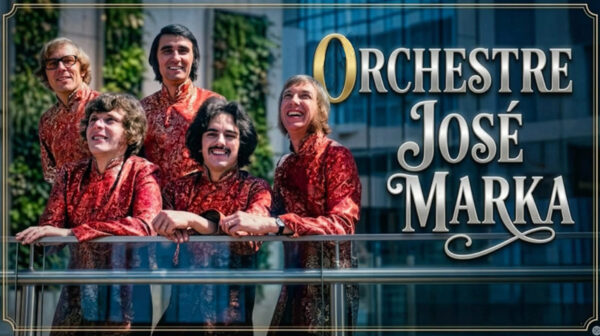
This is what the José Marka Orchestra sounded like:
16
The Ghost Motel
One day, through our agency, we received an unusual offer from Liechtenstein: two months in a motel in Gamprin, very well paid.
My first reaction, however, was: Where the hell is Gamprin?
Even stranger was the agency’s assurance that we did not need to worry about anything at all; the fee for the entire engagement had already been deposited. That was completely unusual.
But if the money was there and the contract was in order, we had no reason to ask too many questions.
So we drove to Liechtenstein.
The motel made an excellent impression. We set up our sound system and instruments, did the soundcheck and then moved into our rooms. They were genuinely lovely, almost luxurious. An excellent dinner came from the kitchen as well.
Really, there was nothing missing.
Except for one thing: there were no guests.
We waited for the evening to begin, but nobody came.
No car pulled up, nobody sat down at the bar, no couple wanted to dance. Even so, at the agreed time we began to play.
In an empty room.
Our only audience was Marianne, the barmaid, who waved to us cheerfully and apparently watched our bewilderment with amusement for a while.
Eventually she called us over to the bar and told us to have a drink first. Whatever we wanted would be on the house for the entire two months.
Naturally, by then we wanted to know what on earth was going on. Marianne explained:
The motel belonged to an industrialist from Winterthur who apparently loved a good party. Switzerland still had an official closing hour in those days, and at midnight everything had to stop. This gentleman did not like that at all. He had found a solution that was as simple as it was expensive:
He bought himself a motel in Liechtenstein.
Whenever he felt like having a proper party, he arrived with his entire entourage. Friends, acquaintances and, naturally, plenty of ladies would descend on the deserted place like a swarm of locusts.
Suddenly every table was occupied, the bar was full, we played and the whole crowd celebrated. Not until midnight, but sometimes until eight in the morning.
Afterwards, complete silence returned.
It could easily be a week before the next party appeared.
The staff were there all the same, the kitchen operated, Marianne stood behind her bar, and we had been engaged and paid for two months.
So we had an excellent orchestra, a luxurious motel, a fine kitchen and a well-stocked bar – only, most of the time, no audience.
For a professional musician, it was actually not a bad engagement. When our industrialist appeared, however, we knew what lay ahead. Within no time at all, the ghost motel turned into a madhouse, and there was hardly any thought of sleep until the following morning.
Afterwards, we had plenty of time to recover.
But we did not want to spend two months sitting in an empty room waiting for our swarm of locusts from Winterthur to descend on us again.
So we made the best of the situation and used all that free time to rehearse. Extensively.
We tried out new arrangements, worked on pieces for which there would hardly have been time during a normal engagement, and expanded our repertoire considerably. Ironically, it was in this deserted motel that many of the numbers were developed which we later played night after night to packed houses.
Looking back, those quiet evenings in Gamprin were therefore anything but wasted time for the orchestra. We could work in peace, experiment and occasionally discard something without a hundred guests watching. Nobody requested a song, nobody wanted to dance, nobody disturbed us.
One evening, our host brought along a special surprise. This time he arrived not only with his friends and ladies, but with the entire Hazy Osterwald Sextet.
Naturally, we knew the musicians, since we ourselves belonged to the large network of the Hazy Osterwald organisation. So for one night, the ghost motel became a great gathering of fellow musicians. Curt Prina was among them.
I need not say any more about him at this point. His name will appear again later.
For the moment, Gamprin was enough for us: two months, excellently paid, good food, beautiful rooms, free drinks – and plenty of time to turn a good orchestra into an even better one.
No applause, but quality.
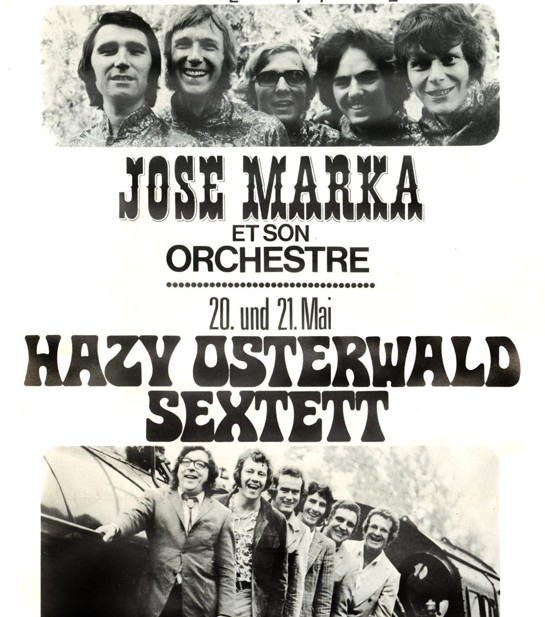
17
Curt Prina and the 10,000 Swiss Francs
I met Curt Prina at the ghost motel in Gamprin.
One evening, the Hazy Osterwald Sextet was a guest there. Their drummer, John Ward, was indisposed, so I had the opportunity to stand in for him and play with the sextet.
Although we all belonged to the large network of the Hazy Osterwald organisation, I had never met Curt personally before.
That changed that evening. Although Curt’s attention rather quickly shifted away from me and towards Magdalena. From the very first moment, he was completely smitten with her. Nobody could have failed to notice it. He pursued her persistently, almost intrusively, even though Magdalena gave him absolutely no encouragement.
She wanted nothing to do with him.
From her point of view, he was probably already an older gentleman anyway. Curt was over forty – and when you are young yourself, that can famously seem almost ancient.
That really could have been the end of the story. The Hazy Osterwald Sextet left again, we stayed in Gamprin and carried on playing in our ghost motel.
But about two weeks later, Curt appeared again.
Alone.
He had actually come all the way back to Gamprin specifically to see Magdalena. Except that this time Magdalena was not there at all.
So Curt and I sat together, and I explained to him that his chances with her were probably not particularly good. I also told him a little about our relationship and tried to make him understand that Magdalena was not someone you could simply win over through persistence.
Curt was not discouraged.
Eventually he made me a proposal that at first left me wondering whether he was joking or being serious:
If I arranged another meeting with Magdalena, he said, and if she eventually married him, he would give me 10,000 francs.
Ten thousand francs.
That was a great deal of money in those days.
I found the whole idea rather absurd.
This successful man surely did not need to offer another man money to deliver a woman to him. And above all, there was one small detail that his plan seemed to overlook:
Magdalena had something to say about it too.
Curt, however, was deadly serious.
Naturally, nothing came of the deal. Our paths separated again, and I thought that was finally the end of the story.
A few months later, we were playing in Velden am Wörthersee. Magdalena happened to be visiting me when Curt Prina appeared again. Privately. Apparently, he still had not forgotten her.
This time there were no 10,000 francs and no marriage proposal with me acting as intermediary. Curt simply handed Magdalena a card. On the front was a photograph of himself, on which he had written:
“For Magdalena – with all my love.”
The card still exists today.
When I look at it, I sometimes think of this successful musician who fell head over heels in love with Magdalena, made two special trips just to see her again, and in all seriousness wanted to offer me 10,000 francs to help him marry her.
I never got the money.
Magdalena did not marry him.
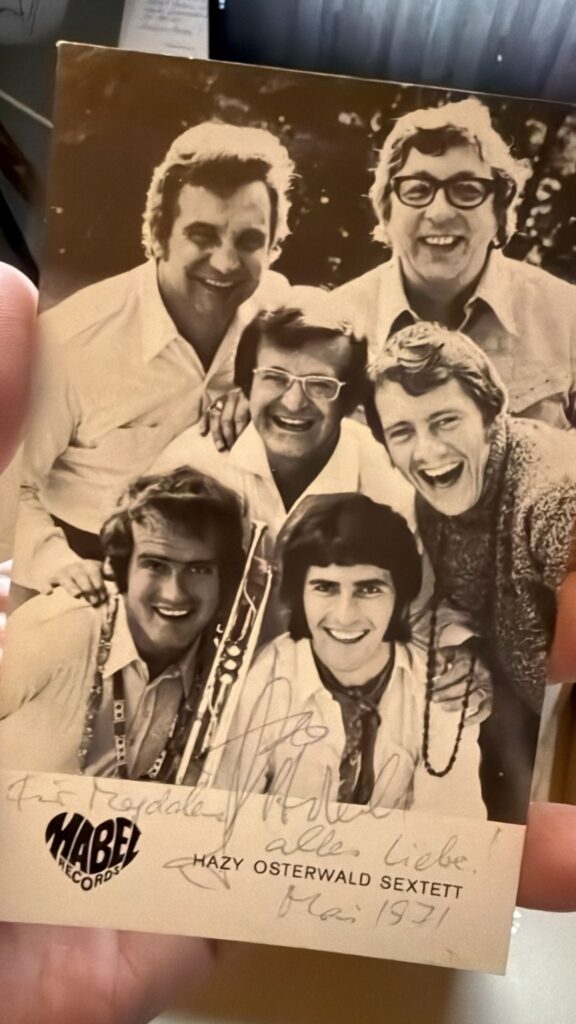
18
My Triumph TR4A IRS Sportscar and the Swedish Luxury Tax
One of our engagements took us all the way to Gothenburg. I liked Sweden, and Gothenburg was a beautiful city, but the journey there already showed me that I had arrived in a slightly different world.
At the time, I drove a Triumph TR4. Today it would be a lovely classic car; back then it was simply my car.
On the way to Sweden, I drove my Triumph onto the ferry in Denmark, and I quickly noticed that for some of the passengers the crossing seemed to be less about transportation than about having a party.
At any rate, the alcohol flowed freely.
My impression was that wine and beer in Sweden at the time were either difficult to obtain or simply very expensive.
On the ferry, however, there were no such difficulties. Some Swedes therefore seemed to travel to Denmark and back simply to drink, without even getting off the ferry.
The main thing was that the ferry kept moving and the glasses stayed full.
The beat goes on, yeah, yeah, yeah.
My Triumph survived the long journey well, but in Gothenburg I noticed that something was wrong with the exhaust.
So I drove to a British Leyland garage and hoped above all that the repair would not be too expensive.
After all these years, I no longer remember the exact figures, but it was roughly like this:
The new exhaust system was going to cost 300 kronor.
That seemed remarkably cheap to me, certainly cheaper than in Switzerland. And while we were at it, I thought I might as well have the fabric roof replaced too. The plastic rear window had become rather unsightly and cloudy.
Another 700 kronor or so. So 1,000 kronor altogether.
I could just about afford that. I gave them the go-ahead.
Two days later, I collected my Triumph.
It stood there looking like a jewel. The new roof looked wonderful, and with the new exhaust system the engine once again had that pleasant, gentle growl that belonged to a British sports car.
I was delighted.
Then I received the bill: 3,000 kronor.
At first I thought there had been a mistake. The agreed 1,000 kronor had suddenly become 3,000.
What on earth had they done to my car?
Then came the explanation: Sweden had a luxury tax at the time, and my Triumph was classified as a sports car and therefore as a luxury.
As I remember it, another 200 per cent was added to the bill.
I had to swallow hard.
But my Triumph had been repaired, the new roof had been fitted and the exhaust was already underneath it.
There was not much room left for negotiation.
So I paid.
I still liked the gentle growl of the engine on the journey back.
Just not quite as much as before.

19
Verbier – Suddenly the Stars Are on Our Stage
Verbier was one of those longer engagements that were common for us in holiday resorts.
We played at the Tara Club for four months. This dance hall belonged to José Marka and his brother. Anyone imagining a small bar somewhere in the Valais, however, would be quite mistaken.
The Tara was a large dance hall with more than 400 seats and was packed night after night.
We performed as José Marka et son orchestre, as the posters of the time proudly announced.
Incidentally, one of those posters advertised the safety of the establishment almost as prominently: Établissement ignifugé – 3 sorties de secours. Fireproof and three emergency exits. At the Tara, you were not only supposed to enjoy yourself, but explicitly to do so safely.
Winter in Verbier was serious business. At times my car almost completely disappeared beneath the masses of snow. Driving was out of the question, so I had no choice but to walk to work every evening.
The route ran steeply downhill for about a kilometre to the Tara Club – and after work, in the middle of the night, naturally the same kilometre back uphill.
After sitting behind the drums for several hours, that climb was not necessarily how you wanted to end a working day. But that was our life.
We played where other people went on holiday, and that certainly did not mean that we ourselves were on holiday.
During the day, however, we had time to ourselves, and one of our little luxuries in those days was a small portable television.
At lunchtime, Magdalena and I regularly watched a French television series.
It was about horses and jockeys, shady dealings and, naturally, dashing stable boys.
For two months, the series was practically part of our daily routine. By then we knew the actors’ faces extremely well, even if their names did not necessarily mean much to us.
One evening, we were on stage at the Tara Club as usual when a young Frenchman was announced and sang a few chansons.
I looked at him and immediately thought: I know that man.
Of course I knew him. After all, we had been watching him on our little television every lunchtime for weeks.
It was the young leading actor from our series:
Gérard Depardieu.
At the time, he was not yet the international film star he would later become. To us, he was simply the man from television who had suddenly appeared in the flesh on our stage at the Tara Club.
Naturally, Magdalena had to see this. Except that on this particular evening, Magdalena was up on the mountain.
I could hardly ask Gérard Depardieu to wait a few hours until she eventually came back down. So a municipal worker was quickly organised, who set off in a snowcat to fetch Magdalena from the mountain. And apparently even this transport could not take place entirely inconspicuously:
Once again, flashing blue lights came into play.
So Magdalena was brought down from the snow-covered mountain in a snowcat because down at the Tara Club the young actor we had been watching every lunchtime for weeks on our little television was waiting.
The brief encounter turned into a long evening.
After our performance, we sat together talking and drinking, and eventually it was six o’clock in the morning.
Depardieu rather quickly had eyes mainly for Magdalena. That, in turn, was not entirely new to me.
Wherever Magdalena appeared, that sort of thing occasionally happened.
In this case, however, there was a built-in safety mechanism: Gérard spoke only French, Magdalena spoke German and only a little French.
And I was the interpreter.
So at least nothing got out of hand.
Gérard Depardieu was not the only prominent Frenchman who suddenly became part of our everyday life during our time in Verbier.
Another was already a world star at the time: Gilbert Bécaud. José Marka was a friend of his, and we had many of his songs in our repertoire.
The famous chanson “Nathalie” was naturally among them. That was convenient for us, because when Gilbert turned up at the Tara and felt like singing, nobody had to look for sheet music or spend ages rehearsing. We knew his songs.
So it could happen that Gilbert Bécaud was sitting at a table with Magdalena, then at some point stood up, came onto the stage, picked up a microphone and sang a few of his own songs.
We accompanied him as though it were the most normal thing in the world.
For the audience, of course, it was something special, but evenings like that were wonderful for us musicians too. A world star did not arrive for an official appearance with great fanfare; he simply dropped in as a friend and sang a few numbers with our orchestra.
Among our guests at the Tara was an American regular. He came often, liked our music and was clearly very happy with what we played. He obviously did not know very much about French chanson singers, however.
One evening, Gilbert Bécaud had once again sung several of his songs with us. During the break, the American came over to me. He was visibly impressed by our guest and was determined to pay me a compliment.
“It’s amazing,” he said appreciatively, “how well that man can sing José Marka’s songs.”
I did not explain to him that it was actually the other way round.
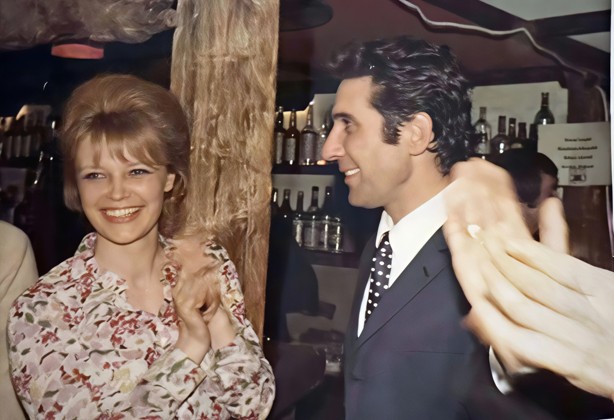
Chris Taramarquaz – Gilbert Bécaud
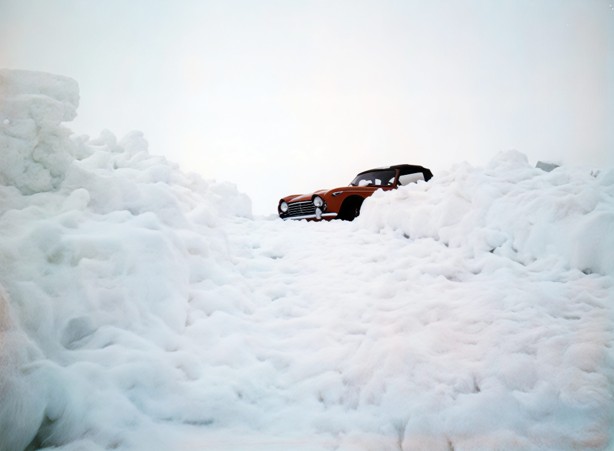
Mein Triumph TR4A IRS – buried in the snow
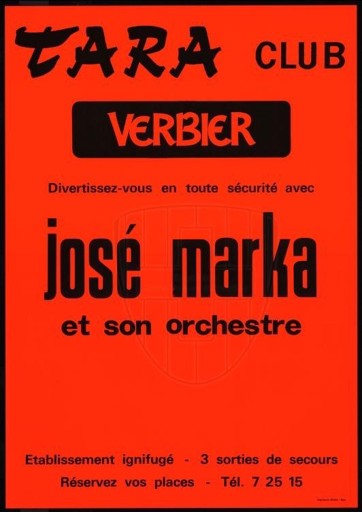
20
PTER 19
In the Middle of the Adriatic
We were playing in Yugoslavia and had to travel on from Zadar to Italy. Bologna was calling. So we took the car ferry from Zadar to Ancona and were rather surprised when we went aboard. We knew this ship.
It really was the same ship that had operated between Denmark and Sweden. At any rate, all the signs were still in Swedish or Danish. Apparently, the ferry had finished its service in the far north and had been given a second life on the Adriatic.
The crossing took several hours, and around midday we began to feel hungry. There was a large restaurant on board that was obviously waiting for guests. White tablecloths, lots of waiters and waitresses, all dressed in black – everything was ready.
Only the guests were missing.
The strange thing was that there were plenty of people. They stood and walked around outside the restaurant, but nobody sat down at a table. We watched for a while and could not make sense of it.
Perhaps the restaurant was too expensive? Perhaps people could not afford, or simply did not want to pay for, a proper lunch?
We were hungry. So we sat down.
The waiters served us, and we ordered our meal together with a good bottle of wine.
The food was not bad, and really we should have been perfectly satisfied.
Only those people puzzled us.
They were still standing outside, looking in at us.
Almost a little pityingly. What was going on?
Shortly before twelve, the waiters suddenly became restless.
They urged us to pay our bill. Hardly had we done so when an incredible transformation began.
The white tablecloths disappeared. In their place came red-and-white checked cloths. Within minutes, the elegant restaurant had become an Italian pizzeria. Suddenly, everywhere you could hear:
“Avanti!”, “Permesso!” and “Subito!”
The people who had been waiting patiently outside streamed in. In no time every table was occupied, and people were eating, drinking, talking and celebrating.
And at last we understood why they had been looking at us so pityingly.
At exactly twelve o’clock, our ferry had apparently crossed the boundary in the Adriatic. Until then, the restaurant had been run by the Yugoslav side. After that, the Italian side took over.
We had eaten at exactly the wrong time.
Half an hour later we could have had pizza, probably eaten better and most likely had even more fun.
But at least we had learned something:
On a ferry from Yugoslavia to Italy, you should wait until the tablecloths are checked before having lunch.
21
Dancehall Hazyland and FC Basel
Basel was my home city, and naturally during my years as a musician we also played at Hazyland in Basel.
For me, it was a special engagement.
For once, I was not somewhere in Sweden, Austria, Germany or a Swiss holiday resort, but at home in Basel.
And of course Magdalena was there too.
The programme at Hazyland at the time included Alfredo, a well-known comedian who performed the show part of the evening. Alfredo was already around seventy-five, but he and the young Magdalena developed an exceptionally warm relationship. She liked him very much and would therefore sometimes sit with him in his dressing room while we were performing.
She was by no means always alone there, however.
FC Basel was enjoying one of its great periods at the time. The team were Swiss champions and cup winners, and several of the players regularly visited Hazyland.
Coach Helmut Benthaus was among them, as was Othmar Hitzfeld, who today is of course best known for his later success as a manager. At the time, he was FC Basel’s centre-forward.
If they had a match the following day, however, the gentlemen had a small problem:
Having a quiet drink at Hazyland was one thing – being seen doing so by the guests was another.
So they retreated to somewhere a little more discreet.
The dressing room.
And Magdalena was already sitting there.
So behind the scenes at Hazyland, quite an illustrious little group could gather: seventy-five-year-old Alfredo, Magdalena and several FC Basel players who were supposed to appear on the football pitch the next day as well rested as possible. How well rested they actually were, I cannot say.
After my career as a musician ended, I returned to Basel, but my enthusiasm for FC Basel remained.
Together with friends, I bought a box at St. Jakob Stadium. That was an experience in itself. At big matches, almost 40,000 people would sometimes be packed tightly together right beside us, while we were extremely comfortable in our box.
Above all, however, we were very close to the players.
They walked past us, greeted us on their way in and out and sometimes stopped for a quick chat.
I gave Magdalena a pass for the box as well.
Even long after we were no longer together, she continued to come to the stadium and could move around freely there. The old friendships had remained, after all, and the players still knew her.
My friends and I were such great FCB fans that even the home matches were not enough for us. We also travelled to away games, even when there was really nothing at stake. And so one day we ended up in Neuchâtel for a friendly against Xamax.
Before the match, the Basel players came onto the pitch. Each had a ball, and they began warming up. We were standing at the side, Magdalena naturally with us. Suddenly Othmar Hitzfeld spotted our little group.
“Hey, friends!”
Then he saw Magdalena.
“What are YOU doing here?”
He kicked his ball over to her and called: “Keep it!”
A few of his teammates apparently thought this was an excellent idea and followed suit.
The next ball flew over to Magdalena, then another and another.
Within a very short time, she was standing at the side of the pitch being showered with footballs by the FC Basel players.
Meanwhile, a small practical problem had developed on the pitch:
There were hardly any balls left to warm up with, so the warm-up more or less came to an end.
The people around us looked at Magdalena with a mixture of astonishment and awe.
Who on earth was this beautiful woman to whom the FC Basel players were giving their footballs?
Naturally, we could have tried to drive back to Basel with our haul.
Instead, we gave the balls to the children standing around us, who could hardly believe their luck.
We kept one.
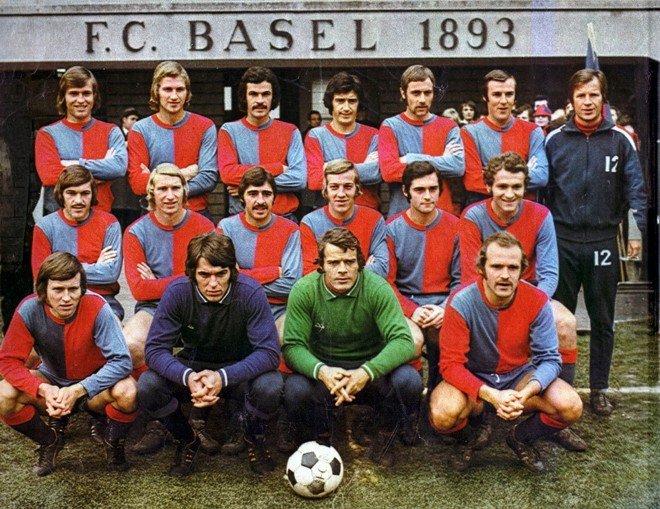
Balmer – Stohler – Hitzfeld – Wenger – Rhyner – Ramseier – Benthaus
Kiefer – Odermatt – Demarmels – Rahmen – Hasler – Mundschin
Fischli – Laufenburger – Kunz – Siegenthaler
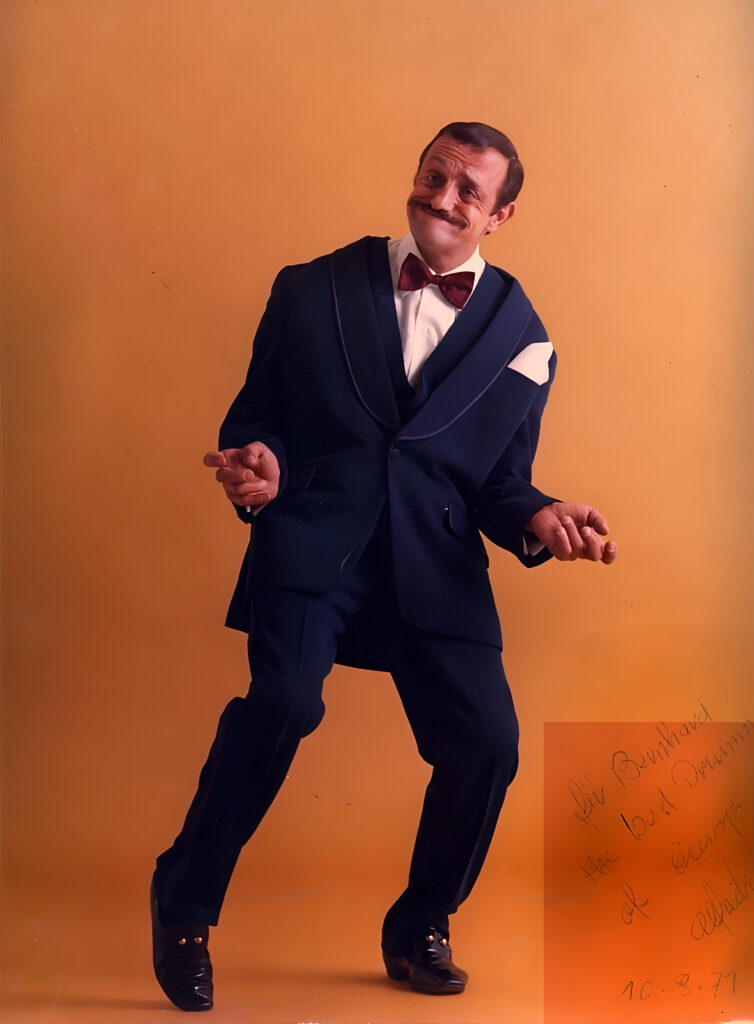
Don Alfredo
22
My Professional Music Career Comes to an End
We were once again in Velden am Wörthersee.
I was staying at the Schlosshotel, and it was there that I discovered tennis for myself. The spark had probably already been lit earlier in Gstaad, where I had been able to watch players such as Ken Rosewall and Ilie Năstase at close quarters.
Now I wanted to try it myself. I took tennis lessons every day and before long was a member of several cheerful doubles groups among the hotel guests.
I got on particularly well with a distinguished gentleman from Düsseldorf.
He owned an insurance brokerage firm, and eventually we began talking about his profession.
That brought us, of all things, to a subject I actually knew something about. Before my years as a musician, I had completed commercial training and had studied transport insurance and maritime law in depth. I had earned my diplomas in this field and liked the subject very much.
So suddenly we were sitting together for hours, talking about insurance, ships and risks on the world’s oceans. He was apparently quite surprised that the drummer from the show orchestra could hold his own in such conversations.
Over time, our discussions led to an astonishing offer:
He had no children and suggested that I come to Düsseldorf, initially live with him and join his company. He wanted to train me and could imagine that one day I might become his successor.
It was tempting. Very tempting indeed. In the end, however, I turned him down.
But the offer had set something in motion. For the first time, I seriously began to wonder whether my life as a professional musician might not go on for ever.
I could sense a change in José Marka as well. At some point he said quite openly that he had had enough. In the Valais, he could take over several dance halls belonging to his brother, and financially he was already secure. So why spend years more travelling from one engagement to the next?
I also began to notice little things that, during my years as a musician, I had simply accepted as part of that life.
For example, I could hardly ever watch television.
During the day there was very little broadcasting in those days and the test card mocked me; in the evenings I was sitting behind the drums.
There were a few events I did manage to see on television.
The moon landing in 1969, of course. And later, in February 1972, the Winter Olympics in Sapporo.
Because of the time difference, the ski races were shown at an hour that was almost ideal for us professional musicians – in the middle of the night.
I particularly remember the men’s downhill. Bernhard Russi won gold and Roland Collombin came second – a Swiss one-two. Incidentally, I knew Roland Collombin personally. We had met several times at the dance hall in Verbier, and he was also a friend of José.
So, as a night worker, I did manage to see something of the Olympics after all.
After all those years on the road, I began asking myself whether it might be time to lead a somewhat more normal life again. After all, I had learned a profession and had not earned my diplomas for nothing. The idea of returning to the insurance business became increasingly concrete.
Through an old friend in Basel, I eventually obtained an interview with the head of a large insurance agency.
So I travelled to Basel and introduced myself.
The man impressed me from the very first moment. Behind his gold-rimmed spectacles, he looked at me with crystal-clear eyes and said quite bluntly:
“Five years away from the profession is a long time. But we’ll give it a try.”
Naturally, we addressed each other formally. Or at least I addressed him formally. He himself did not always stick to that rule.
When we came to salary, I knew this could be a delicate point. I had earned very well as a professional musician, and I was perfectly aware that he could not pay me anything close to the same amount.
I did not expect him to. Even so, we had to talk about money.
My future boss flared up:
“Here I am giving this young rascal a chance – and now he wants a salary as well!”
We both laughed and eventually agreed on a starting salary I could live with.
“You’ll start out at the front counter,” he said.
There I was thrown straight back in at the deep end, only this time without a drum kit.
The counter was busy, customers stood in front of me, and after five years away from the business I first had to get my mind back around quite a few things.
My boss was apparently watching all this very closely.
Sometimes he came to the front and then disappeared into the glass-fronted office of the chief authorised signatory. From my position I could see the two of them looking over at me, talking at length and continuing to observe me.
Naturally, I had no idea what they were discussing.
But I cannot have been doing too badly.
After only three months, I was allowed to leave my place at the counter and move into the back offices of the agency.
My boss was a man of the old school.
Every Monday he went to the barber. The fact that the salon was normally closed on Mondays made no difference. It opened for him.
He could be strict, but at the same time he had a sense of humour that I liked very much.
One day he came through the door of the large agency and shouted across the room:
“Casti! Casti! What a disgrace! Into my office at once!”
The entire room fell silent.
My colleagues looked at me as though my newly revived insurance career was about to come to a very abrupt end. I did not actually have a guilty conscience, but I hurried into his office all the same and closed the door behind me.
The moment we were alone, he burst out:
“So what the hell was FC Basel playing at yesterday?”
It was about football.
We laughed heartily, and when I came out again everyone looked at me expectantly.
“I just about survived,” I said, and proudly returned to my desk.
My boss owned a beautiful Mercedes convertible. He knew perfectly well how much I would enjoy driving it, and every now and then he tossed me the keys:
“Wash it, fill it up, back by twelve.”
Naturally, I carried out such assignments with particular conscientiousness.
After all, one might as well make use of the opportunity, and so one day I also drove the Mercedes over to see Magdalena. We went for a coffee together. It was winter, the roof remained closed, and afterwards I naturally returned the car clean and with a full tank.
The next day my boss looked at me and started laughing.
“Are you trying to get me into trouble? My wife smelled another woman’s perfume in the car.”
Looking back, I have to say that I was extraordinarily lucky with this boss.
Two negative examples from earlier and later in my life come to mind by way of contrast:
During my commercial apprenticeship, my boss at the time missed an important deadline. A customer wanted to register his new Jaguar and needed an insurance certificate for the vehicle inspection.
My boss had forgotten about it. As a result, the customer could not drive his new car to Ticino as planned.
My boss then summoned me and made an astonishing suggestion: I should take the blame.
In return, he would give me ten francs.
That really was a classy move.
A little world collapsed for me at the time – not because of the ten francs, but because of such a complete lack of backbone.
A later boss was a real rogue.
I was new at the company and asked whether I could take over an existing client. The client happened to be a very close friend of mine.
My boss did not know that. Apparently, he had not got on particularly well with this client – nor with a number of others. So I was allowed to look after him.
And lo and behold: the portfolio of insurance policies steadily grew. Among other things, a large number of lorries were added.
One morning my boss said to me:
“The director called me and wants me to look after him again.”
That was, of course, a lie.
The “director” is and remains a dear friend of mine – and, moreover, my bandmate in a jazz band.
Later, I was even reprimanded for not having disclosed this connection in the files.
Whatever respect I had had for these two specimens of bosses had by then evaporated completely.
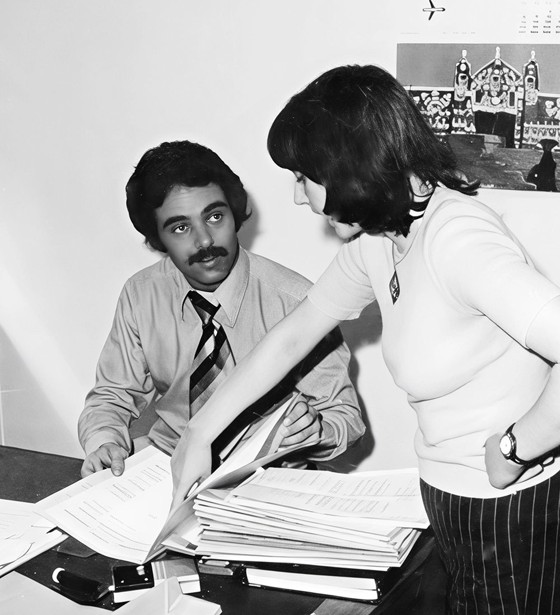
23
My Time with MONROE – Rock Band 1980
I was attending a social event at my tennis club. The mood was lively, everyone was celebrating, and a good dance band was playing.
Suddenly my tennis friends remembered my past as a drummer.
“You absolutely have to sit in! And there has to be a drum solo as well. Avanti, attack! You’re not usually this shy. Come on, come on, subito!”
They asked the bandleader whether I could make a brief appearance. He agreed, after naturally asking his drummer first.
I readily admit:
During my years as a professional musician, I had hated situations like this with a passion.
Some slightly tipsy would-be drummer wanting to bash away on my beloved Ludwig drums – for me, that was a nightmare.
But now, suddenly, I was the visiting drummer myself.
Still, I had once been a seasoned professional. So I went into action.
We quickly agreed on what to play, and off we went.
A fairly fast number with a tricky rhythm.
It did not take the band long to realise that this was apparently not just some hobby drummer sitting behind the kit. The old professional was still there.
And obviously they had gained enough confidence in me, because suddenly the bandleader gave me a signal I really had not expected:
Drum solo.
That was quite brave of him. After all, by then I had probably not been anywhere near a drum for three years. And what would he have done if I had turned out to be a complete disaster?
So I decided not to play anything complicated, but something simple and effective.
It worked.
Now my tennis friends were delighted too:
“Encore! Encore!”
What I did not know that evening was that this little drum solo would have consequences.
The rock band MONROE was just on the verge of a breakthrough, but they were unhappy with their drummer at the time. The barmaid at our party was the girlfriend of MONROE’s guitarist. Apparently she told him that a completely unknown drummer had made quite an impression that evening.
Sure enough, a few days later I received a phone call from their manager.
Would I come to an audition?
Now I really was in a dilemma.
By then my life consisted of work, family and tennis. My own drum kit had disappeared into the furthest corner of the cellar.
But somehow the idea appealed to me.
To play in a real band again?
I said yes.
The audition took place on a completely unfamiliar drum kit – and it was a complete success.
The former professional reappeared.
And I have to admit:
It was tremendous fun.
Instead of receiving the usual answer after one or two songs:
“Not bad. We’ll be in touch.”
… we kept playing.
We jammed and rocked deep into the night until the rafters shook.
That settled it:
I became a member of MONROE.
And the band really was good.
A record contract was negotiated.
That was a very big deal in those days.
We appeared on the cover of a pop music magazine.
Swiss television even filmed a fine clip with us in a motor vehicle workshop, which was broadcast on the first channel.
At that point, a promising career could really have begun.
Musically, it worked.
On a personal level, not at all.
There were constant arguments in the band. I stayed out of them as much as I could, but eventually even that was no longer enough.
After only six months, the whole episode was over.
This is what MONROE sounded like:
Monroe Playlist Link:
https://www.youtube.com/playlist?list=PLECtzrBqZ8iaiuRm0nKmDmHlLIfl4iD4w
VIDEO SWISS TV

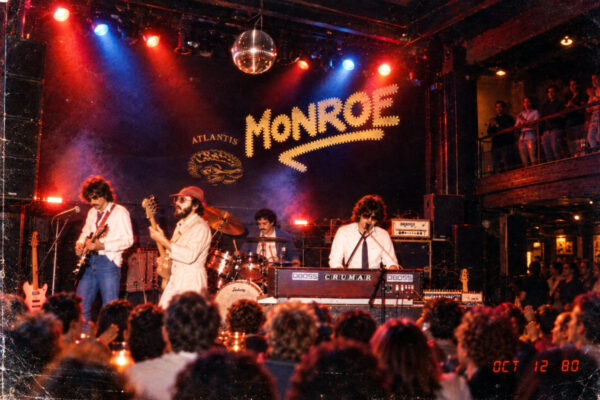
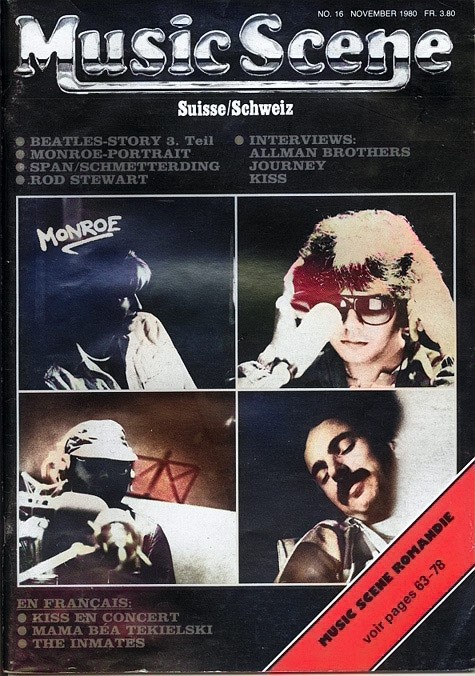
Cover Music Scene
24
Drummerworld – My Second Career
Many years had passed since I had ended my career as a professional musician. Even so, the drums had never really disappeared from my life. At the time, I could not have imagined that decades later they would lead me into an entirely new world.
In 1995, I was in hospital. My tennis career was over and I needed an operation on my back. My best friend came to visit me and brought an unusual present: his Mac laptop.
“You can play around with this a bit,” he said.
And then he showed me something that we take completely for granted today, but which was still almost exotic back then: the Internet.
The modem purred, whistled and beeped, we waited – and eventually an image very slowly appeared on the screen.
The operation went well, but I could not get this Internet out of my mind. While I was still in hospital, the thought occurred to me that I could make a website myself.
But about what? Motorcycles? Cars? Drums? Yes – that was it.
I began with the three most famous drummers who spontaneously came to mind:
Buddy Rich, Steve Gadd and Bernhard Castiglioni.
Each of them got his own page, complete with photographs, a biography and even sound samples.
Naturally, it was a joke. I had never played in the same league as Buddy Rich and Steve Gadd, but after all, it was my website, so at least at the beginning I was allowed to invite myself.
My career as one of the three greatest drummers in the world did not last particularly long, however.
The first reactions soon arrived.
If Buddy Rich was included, then Gene Krupa naturally had to be there too. And if Steve Gadd belonged there, Dave Weckl could hardly be left out.
More and more names were added, and three drummers became ten, then fifty and finally a hundred. At some point, Bernhard Castiglioni had to leave this illustrious company again.
I did not find that too difficult.
Today, it is hard to imagine just how empty the Internet was in those days. There was no YouTube and no Wikipedia, and even good photographs of well-known musicians were difficult to find online.
Information that appears on our screens within seconds today had to be laboriously gathered from all kinds of sources.
And that was precisely where Drummerworld’s great opportunity lay.
A dear friend gave me twenty years’ worth of a drumming magazine, and I began scanning photographs and gathering information. Biographies, photos and sound samples were collected, edited and put online.
The site grew and became increasingly well known.
Major DVD producers and publishers began sending me their productions. They wanted me to publish short excerpts on Drummerworld to help promote their DVDs.
For me, these videos were an enormous enrichment of the website; for the producers, they were advertising. A classic win-win situation.
The original three drummers had meanwhile grown to around five hundred, and Drummerworld was no longer a small private website from Switzerland.
Then something happened that I had never expected: the world’s most famous drummers themselves began to notice Drummerworld. They sent me photographs, videos, biographies and other material because they wanted to be represented on the site.
At the same time, word had spread in the music business that well-known singers and producers also browsed Drummerworld when they were looking for a drummer for a new project.
Suddenly, being included in my gallery acquired an importance I had never intended.
If you were on Drummerworld, you were seen.
Conversely, some people apparently even began to feel: if you are not on Drummerworld, you do not exist.
Naturally, I could simply have included everyone who asked. But that was exactly what I did not want. My policy was clear: no flashes in the pan.
Drummerworld was to remain a selection, not become a telephone directory for drummers.
If I was unsure about someone, by then I could make use of an option I could never have imagined a few years earlier:
I asked one of the star drummers for his opinion. So sometimes the very musicians I had once admired myself helped me decide whom to include.
Google also became aware of Drummerworld and invited me to its European centre in Zurich to talk about my experiences.
By then, at the very latest, it was clear that my pastime following a back operation had grown into something whose scale I had completely underestimated at the beginning.
Then the travelling began.
I flew to the NAMM Show in Anaheim, to PASIC in Austin and Columbus, visited the London Drum Show and, of course, the Musikmesse in Frankfurt.
For a drummer, it was paradise. They were all there:
The drummers whose records I had once listened to and whose playing I had admired. Many of them were now represented on Drummerworld and knew me.
At these shows, the great drummers usually appeared at the stands of their endorsers – the companies whose instruments, cymbals, drumheads or sticks they played and represented.
I had one great advantage: I belonged to no company. I could move around freely, go from one manufacturer to the next and maintain my contacts everywhere. I was independent and yet warmly welcomed wherever I went.
By then, Drummerworld had achieved a level of recognition I could never have imagined during my first tentative steps on the Internet.
Wherever I went – Anaheim, Austin, London or Frankfurt – the professional drummers knew Drummerworld, and most of them knew me as well.
Sometimes that was a rather strange feeling.
After all, I had not arrived there as a famous drummer.
Quite the opposite: names on record covers had become real people to me, and some acquaintances developed into friendships.
Eventually, there I was quite naturally standing beside Steve Gadd for a photograph – one of the three drummers with whom Drummerworld had begun while I was lying in a hospital bed.
Sadly, Buddy Rich was the only one I never had the chance to meet.
What might have looked from the outside like a wonderful hobby had, however, long since become a full-time occupation.
Drummerworld did not mean only travelling, famous musicians and wonderful encounters. The website had to be maintained every single day.
Reviewing material, editing photographs, preparing videos, updating biographies, assessing new drummers, maintaining contacts, answering emails and solving technical problems – it took around eight hours a day.
As I approached eighty, I eventually realised that my energy was not unlimited. The travelling in particular was beginning to exhaust me.
I looked for a successor, but that proved more difficult than I had expected. Taking over a famous website might have sounded attractive.
But working on it for eight hours a day at the same time was quite a commitment for many people.
Eventually, a large company in the United States came forward that wanted to take over Drummerworld.
They promised to continue the site in the spirit in which I had run it and to turn it into a modern, completely up-to-date news platform for the international drumming world.
The price was very good, but my scepticism remained.
In the end, I agreed.
Unfortunately, those plans were never realised.
The actual Drummerworld website, as I had built it and maintained it for so many years, no longer exists today.
What remains are the discussion forum and the YouTube platform, with around 440,000 subscribers.
That hurts. When you have built something over so many years and invested a considerable part of your life in it, naturally you want it to live on.
But I cannot judge Drummerworld only by the way it ended.
What began in 1995 in a hospital bed with a borrowed Mac laptop and a beeping modem took me around the world once again.
I met in person the drummers I had once admired.
Some of them became friends. A small website in Switzerland became an international platform for drummers, and for many years it was part of my everyday life.
I had ended my career as a professional musician decades earlier.
But the drums had never let go of me.
Perhaps Drummerworld was not really a second career at all, but simply a continuation of the first by different means.
It had all begun with three names: Buddy Rich, Steve Gadd and Bernhard Castiglioni. Admittedly, one of the three had to leave the gallery rather quickly.
But somehow, he remained part of it right to the end.
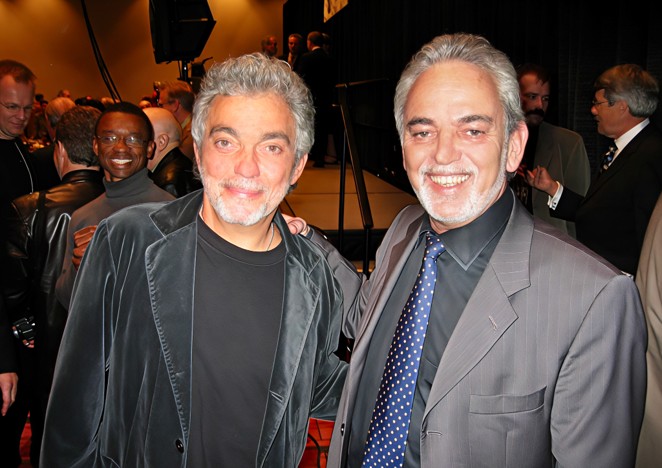
Steve Gadd und Bernhard